
Industrial Drying Systems
Explore the main industrial heat pump drying architectures and the engineering inputs used to develop a complete project solution.
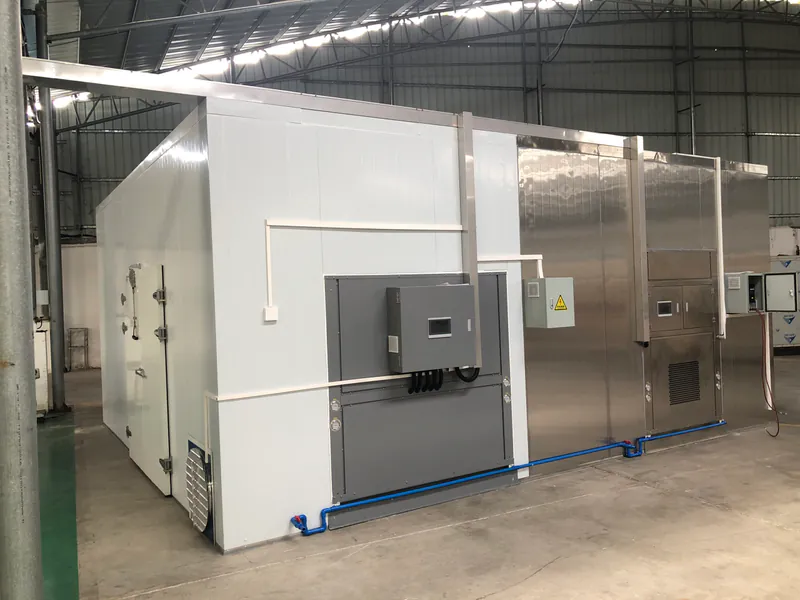
Review the process before selecting architecture.
- Material: form, preparation, handling and temperature sensitivity.
- Moisture: initial moisture, target moisture and discharge requirement.
- Capacity: fresh quantity, batch size, schedule and loading workflow.
- Site: climate, power supply, room and installation constraints.
- Airflow: supply path, return path, distribution and room pressure.
- Controls: temperature, humidity, sensors, alarms and PLC sequence.
Six system directions for project review.
Closed-Loop Heat Pump Drying
Process-air recirculation and controlled moisture removal may fit projects requiring a defined room process.
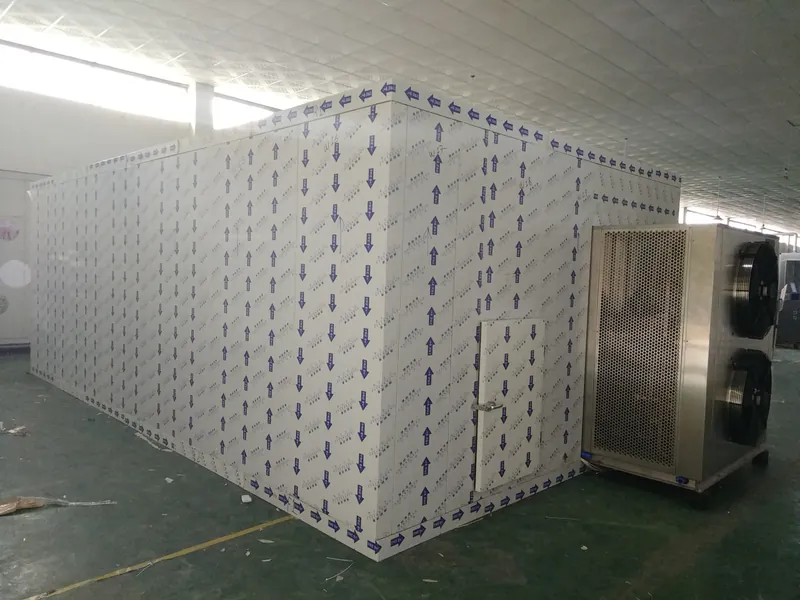
Open-Loop Heat Pump Drying
Fresh-air intake and exhaust are considered with ambient climate and moisture discharge.
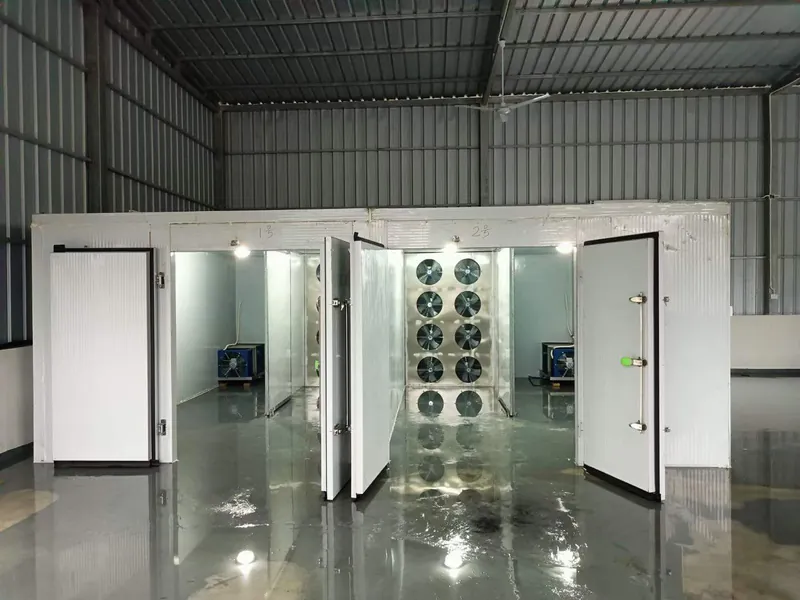
Industrial Drying Rooms
Room design connects loading, insulation, airflow, access and heat pump integration.
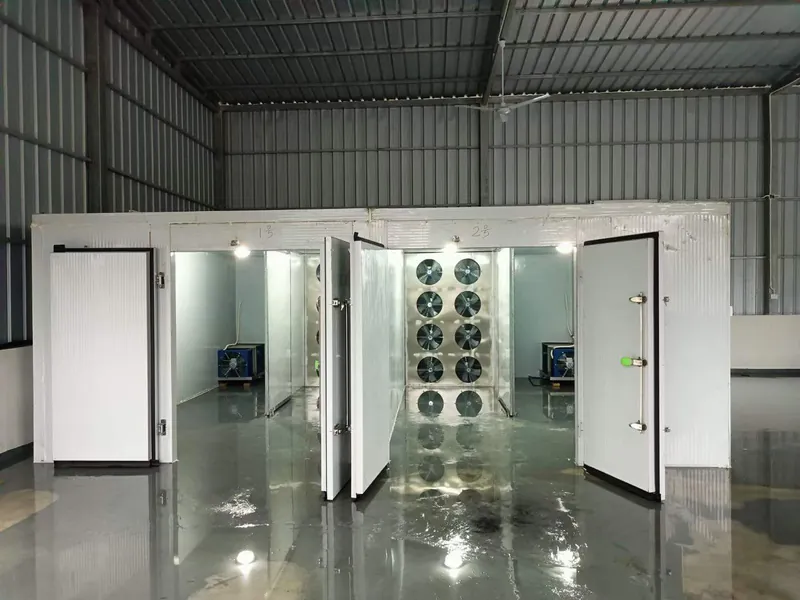
Custom Industrial Systems
Custom projects connect capacity, moisture removal, airflow, controls and site conditions.
Batch Drying Systems
Batch projects connect loading, drying, unloading, room airflow and the real production schedule.
Dehumidification Drying Systems
Condensation moisture removal is reviewed with recirculated air, room conditions, drainage and controls.
Open-loop and closed-loop review points.
| Review point | Open-loop | Closed-loop |
|---|---|---|
| Air path | Fresh air intake and exhaust form part of the process review. | Process air is recirculated through a defined drying circuit. |
| Climate influence | Ambient temperature and humidity can directly affect the review. | Room and process conditions are reviewed with moisture removal requirements. |
| Moisture path | Exhaust arrangement and discharge route require planning. | Moisture removal and condensate or discharge approach require planning. |
| Installation | Intake, exhaust and room pressure conditions must be considered. | Room envelope, air circuit and equipment integration must be considered. |
| Selection | The suitable architecture depends on material and process requirements and requires engineering review. | |
Four steps from brief to design direction.
Collect Inputs
Material, moisture, capacity, temperature, climate, power and room information.
Map the Process
Loading, airflow, moisture path and operating workflow are reviewed.
Compare Architectures
Open-loop, closed-loop and room integration options are considered.
Plan Controls
Temperature, humidity, sensors, alarms and PLC expectations are clarified.
Continue the project review.
Review operational diagnostics with the system architecture.
Need help selecting an industrial drying system?
Send the process information available for an initial HPDRYER review.