
Dehumidification Drying Systems
A dehumidification drying system removes water vapor from process air by cooling it below the dew point, collecting condensate and then managing the conditioned air for continued moisture pickup. The complete design depends on the air circuit, room envelope, moisture load, controls and installation conditions.
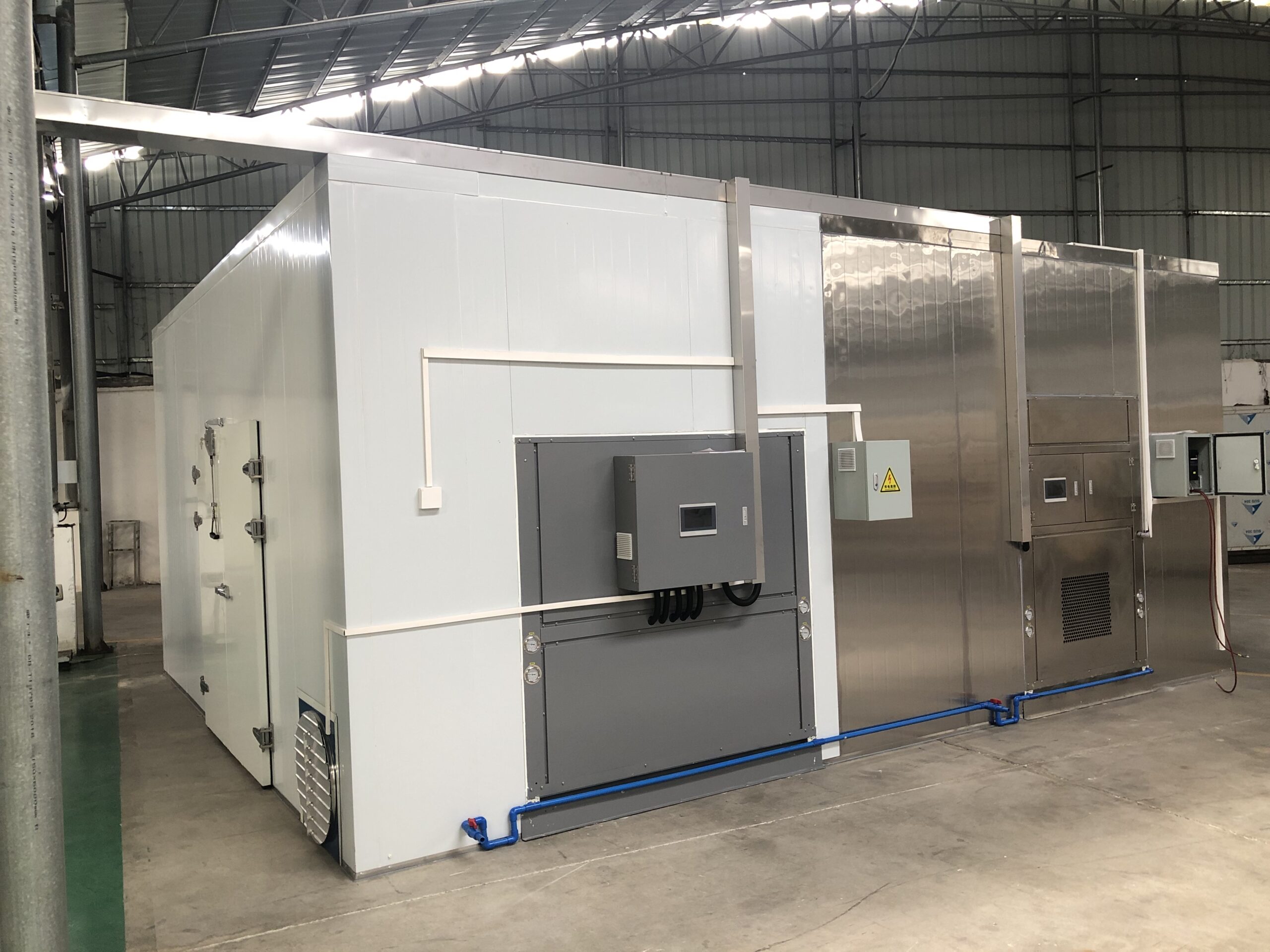
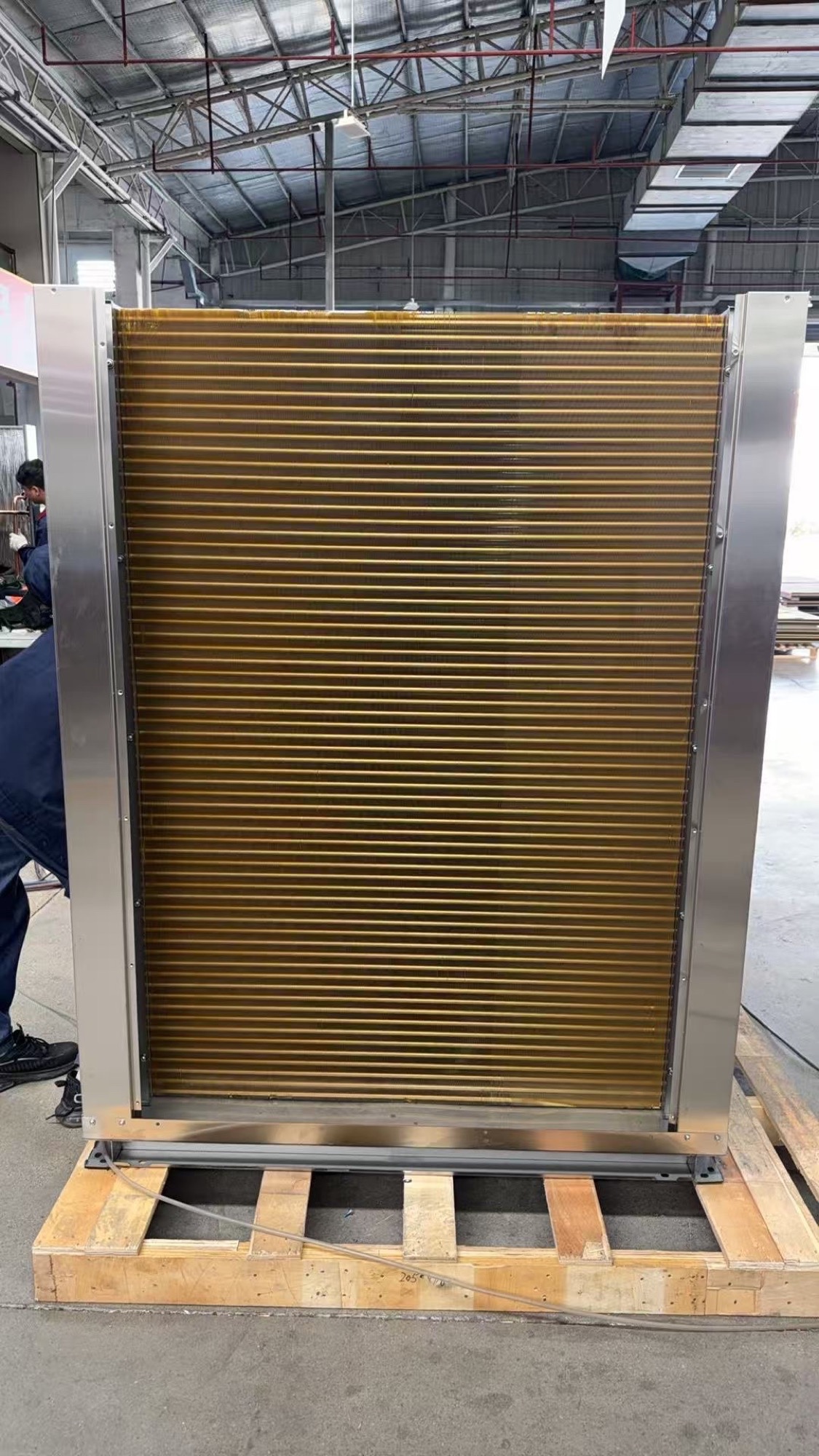
Condensation changes water vapor into a drainable liquid.
Moist air leaving the material zone can pass across a cold heat-exchanger surface. When the surface condition is below the air’s dew point, part of the vapor condenses. The resulting water must be collected, drained and managed without allowing leakage or uncontrolled re-evaporation. The dried air may then be reheated and returned to the material zone when the design uses recirculation.
Moisture Pickup
Conditioned air crosses the material and accepts water vapor released from its surface and interior.
Air Cooling
Moist process air is cooled at the dehumidifying heat exchanger to create condensation conditions.
Condensate Removal
Liquid water is collected in a drain path designed for access, cleaning and reliable discharge.
Air Reconditioning
The air is reheated or otherwise conditioned before continuing through the selected process-air circuit.
Air recirculation requires a defined room and equipment circuit.
Recirculation can reduce direct dependence on continuous fresh-air replacement, but it does not remove the need for engineering review. Room leakage, door openings, loading interruptions, heat losses and the moisture-removal duty affect the operating condition. A closed-loop drying arrangement commonly uses recirculated process air and condensation, but not every product described as a dehumidifier has the same air path, heat recovery arrangement or room integration.
Room Envelope
Insulation, vapor behavior, doors, joints and unintended leakage influence control stability and heat loss.
Condensate Path
Drain size, slope, trap arrangement, cleaning access and discharge location require site coordination.
Air Distribution
Recirculated air must still pass through the loaded material rather than bypassing trays, racks or trolleys.
Service Access
Heat exchangers, filters, drain pans, fans and sensors should be accessible for inspection and cleaning.
Ambient conditions still matter even with recirculation.
The installation environment affects casing losses, door-opening events, heat rejection, equipment protection and startup behavior. Temperature and humidity sensors should be positioned to represent the material zone and relevant return-air conditions. The control sequence may coordinate compressors, fans, defrost or protection functions, condensate alarms and stage setpoints, but final logic must follow the selected equipment and material process.
| Review point | Engineering question |
|---|---|
| Temperature | What material limit and process stages are supported by verified information? |
| Humidity | Which measurement location represents moisture release and process progress? |
| Condensation duty | How much water must be removed during the effective process time? |
| Drainage | Where can condensate be discharged and inspected safely? |
| Room leakage | How will doors, seals and loading operations affect the air circuit? |
Heating, ventilation and dehumidification solve different parts of the process.
Simple heating raises air temperature but does not define where the released moisture goes. Ventilation can discharge moisture with exhaust air, but its performance depends strongly on intake conditions and air balance. Dehumidification creates a condensation path, yet its usefulness still depends on moisture load, airflow, room design and controls. The correct comparison is therefore the complete drying architecture, not one component name.
Review the relationship with closed-loop heat pump drying and the broader open-loop versus closed-loop comparison.
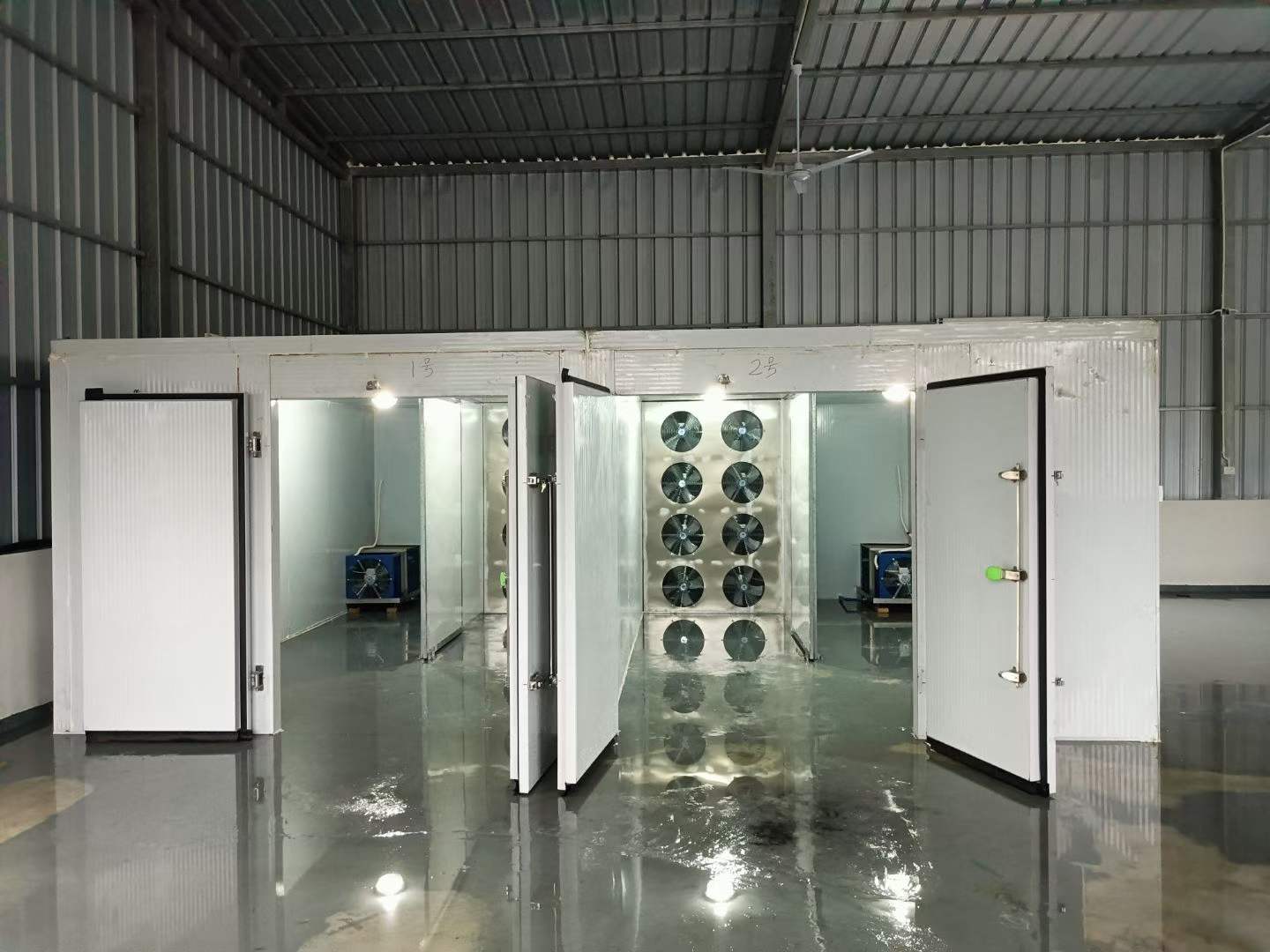
Define the moisture duty and installation boundary.
- Material: form, preparation, temperature sensitivity and quality priorities.
- Moisture: fresh quantity, initial moisture, target moisture and measurement basis.
- Schedule: batch size, effective process time from validated information and operating hours.
- Room: dimensions, insulation, doors, leakage risk and loading arrangement.
- Site: climate, electrical supply, drainage, equipment space and maintenance access.
- Controls: required sensors, alarms, stages, records and operator interaction.
Continue the moisture-removal review.
Review dehumidification as a complete drying process.
Provide the material, moisture load, schedule, room and site information available so HPDRYER can evaluate the required air and moisture paths.