
Open-Loop vs Closed-Loop Heat Pump Drying
Open-loop and closed-loop drying use different air-path concepts. The appropriate architecture depends on material, climate, moisture removal, room and control requirements.
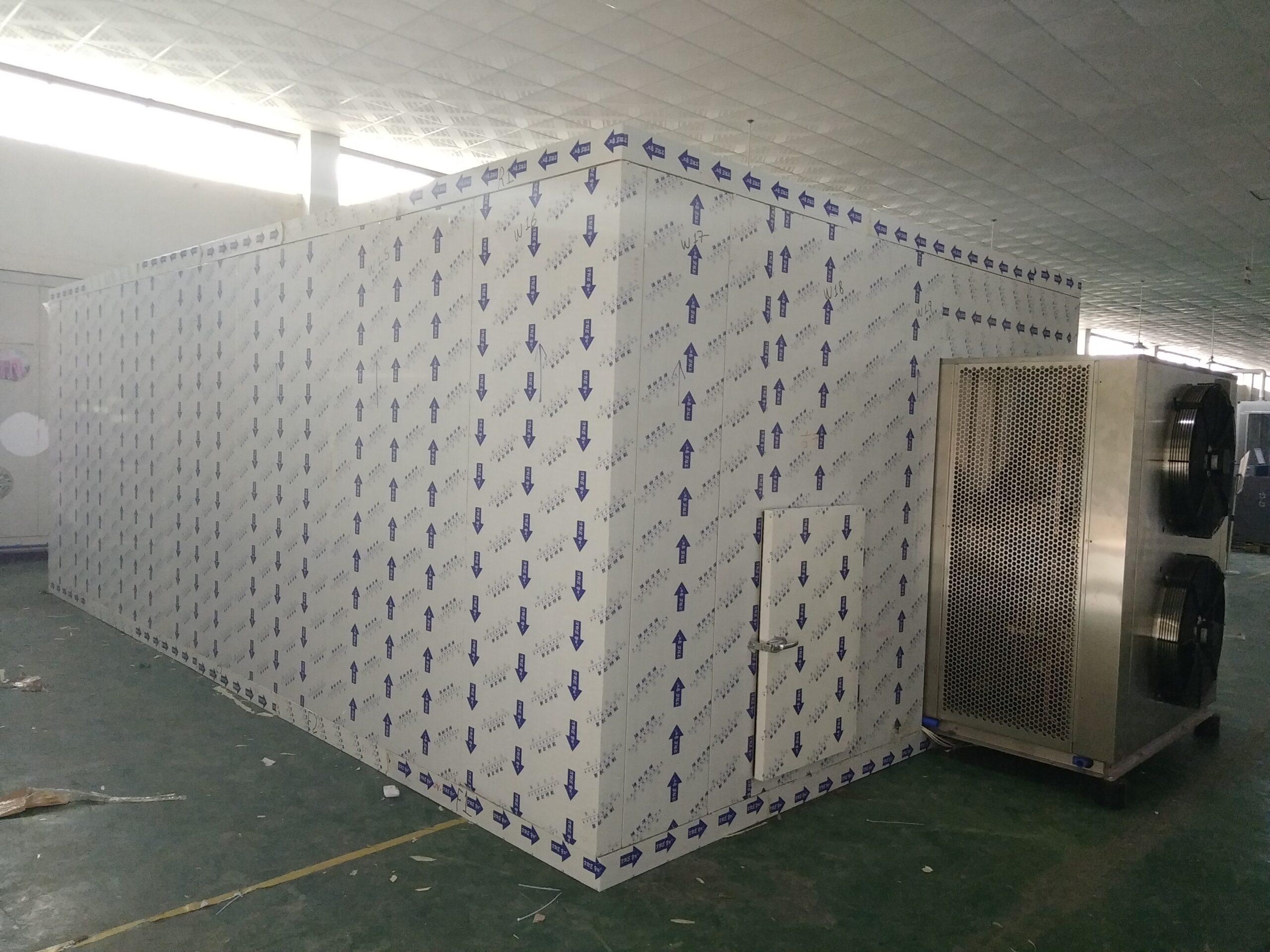
Architecture changes the engineering questions.
Open-loop review emphasizes fresh-air intake and exhaust. Closed-loop review emphasizes recirculated process air and controlled moisture removal. Neither is universally better.
Information used for the first engineering review.
Material
Form, sensitivity, preparation and target moisture.
Climate
Ambient temperature and humidity at the installation site.
Moisture path
Exhaust or controlled removal and discharge conditions.
Installation
Room, airflow, power supply and access constraints.
Compare the air path and process conditions.
The review compares intake, exhaust, recirculation, moisture removal, room integration and controls against the material and site.
| Engineering question | Open-Loop | Closed-Loop |
|---|---|---|
| Process air path | Uses a planned fresh-air intake and exhaust path. | Recirculates process air within a defined system path. |
| Dependence on ambient climate | Ambient temperature and humidity can influence intake and exhaust review. | Ambient influence is reviewed together with room envelope and internal moisture handling. |
| Moisture discharge method | Moisture leaves through the designed exhaust or air-exchange path. | Moisture is handled through the selected moisture-removal and condensate path. |
| Room-envelope considerations | Openings, intake, exhaust and pressure relationships need coordination. | Sealing, insulation, access and recirculation paths need coordination. |
| Control considerations | Controls may coordinate intake, exhaust, temperature, humidity and airflow. | Controls may coordinate recirculation, moisture removal, temperature, humidity and airflow. |
| Main engineering questions | What climate, air-exchange and discharge conditions apply? | What room, moisture-load and recirculation conditions apply? |
Process air path
Open-Loop: Uses a planned fresh-air intake and exhaust path.
Closed-Loop: Recirculates process air within a defined system path.
Dependence on ambient climate
Open-Loop: Ambient temperature and humidity can influence intake and exhaust review.
Closed-Loop: Ambient influence is reviewed together with room envelope and internal moisture handling.
Moisture discharge method
Open-Loop: Moisture leaves through the designed exhaust or air-exchange path.
Closed-Loop: Moisture is handled through the selected moisture-removal and condensate path.
Room-envelope considerations
Open-Loop: Openings, intake, exhaust and pressure relationships need coordination.
Closed-Loop: Sealing, insulation, access and recirculation paths need coordination.
Control considerations
Open-Loop: Controls may coordinate intake, exhaust, temperature, humidity and airflow.
Closed-Loop: Controls may coordinate recirculation, moisture removal, temperature, humidity and airflow.
Main engineering questions
Open-Loop: What climate, air-exchange and discharge conditions apply?
Closed-Loop: What room, moisture-load and recirculation conditions apply?
Compare the air path, moisture discharge route and installation conditions before choosing an architecture.
- Open-loop: Review intake, exhaust and ambient conditions.
- Closed-loop: Review recirculation, room envelope and moisture removal.
- Material: Keep temperature and moisture sensitivity central.
- Selection: Use project data rather than a universal preference.
Questions that should be resolved early.
- Universal claims: Do not state that one architecture is always better.
- Climate omission: Ambient conditions can change the engineering review.
- Air-path ambiguity: A system selection without airflow assumptions is incomplete.
Compare architecture before fixing the system scope.
Have a project to review?
Share material, moisture, capacity, climate, loading, airflow and control information with HPDRYER.