
Industrial Dryer Commissioning Checklist
Quick Answer
Industrial dryer commissioning is a staged process that verifies the installed mechanical, electrical, airflow, drainage and control functions against the approved project documents before routine production. It should progress from document and safety review to unloaded checks, controlled functional tests and a recorded material trial. The checklist and acceptance criteria must reflect the supplied scope, local requirements and agreed process basis rather than an assumed universal test protocol.
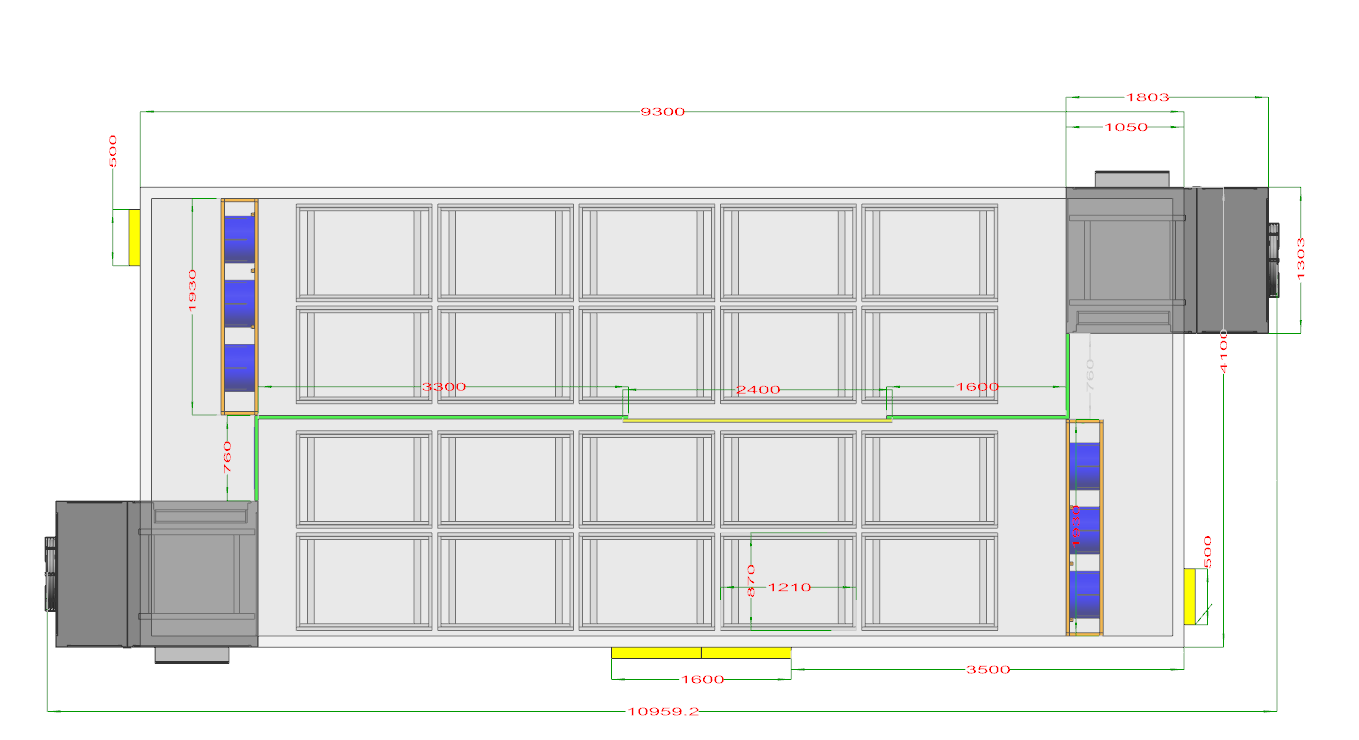
Verify the installed system against documented requirements.
Commissioning is not simply switching on the equipment. It establishes what was designed and supplied, checks installation readiness, demonstrates defined functions, records deficiencies and hands over usable information. The U.S. Department of Energy describes commissioning as verifying that systems are installed and operate according to the original design and engineering criteria. ASHRAE Guideline 0 similarly frames commissioning as a documented process for meeting the owner’s project requirements.
For an industrial dryer, the process must also address the material, room, loading hardware, process-air path, moisture discharge and control recipe. Final product acceptance cannot be inferred from an empty-room test.
Document and mechanical readiness
Approved Basis
Confirm current drawings, equipment list, room layout, electrical information, control description and responsibility boundaries.
Mechanical Installation
Inspect equipment supports, fasteners, panels, doors, ducts, fans, guards, filters and accessible service clearances.
Air Path
Confirm intended supply and return routes, intake and exhaust where used, damper positions and absence of shipping covers or obstructions.
Drainage
Check condensate trays, slopes, drains, traps or pumps, discharge destination and visible leak risk.
Electrical and control readiness
Qualified personnel should verify supply characteristics, protective devices, grounding, conductor termination and phase sequence against the approved project documentation and local requirements. Fan rotation should be checked safely before relying on airflow direction. Electrical work must follow the project’s energy-isolation procedure.
Confirm sensor identity and location, PLC input readings, operating modes, fan and damper commands, alarms and safety interlocks. A control output indication is not proof that the connected device moved correctly; observe the physical response where safe.
Use the PLC drying control page to define the sequence and records required for the project.
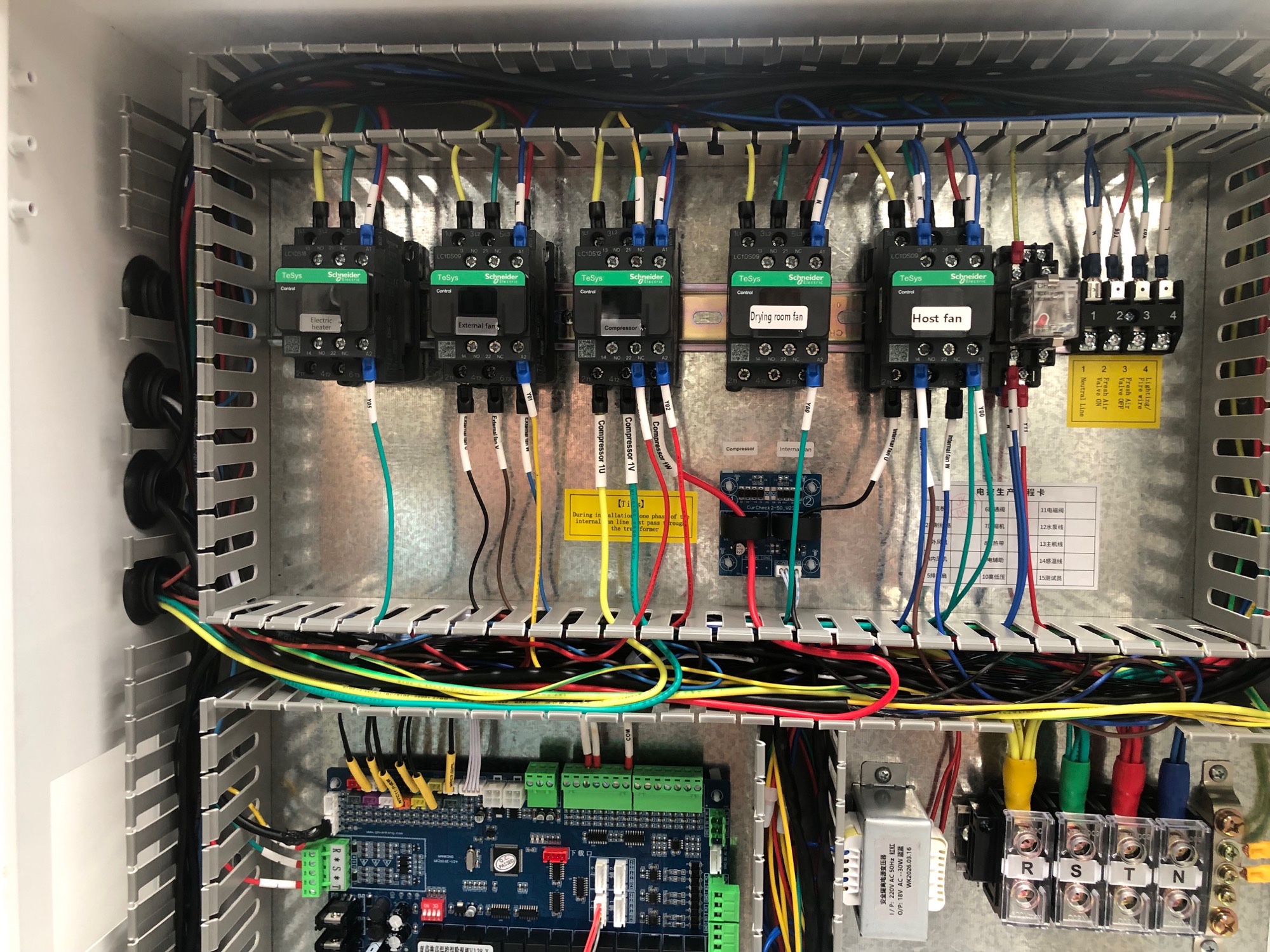
Progress from readiness to a controlled material trial.
| Stage | Checks | Required record |
|---|---|---|
| 1. Pre-start | Documents, guards, access, room, doors, ducts, drains, utilities and safety isolation. | Readiness checklist, open items and responsible parties. |
| 2. Unloaded operation | Fan direction, abnormal noise, airflow path, sensors, dampers, drainage and basic control response. | Observed direction, readings, alarm checks and deficiencies. |
| 3. Functional sequence | Operating stages, setpoint response, fan logic, moisture path, interlocks and controlled stop. | Test steps, expected response, actual response and corrective action. |
| 4. Loaded trial | Defined material, preparation, tray mass, trolley position, representative measurements and endpoint method. | Batch sheet, trends, observations and sample locations. |
| 5. Handover | Resolved items, operator instruction, maintenance information, drawings and approved parameters. | Signed handover package and remaining limitations. |
Verify direction and distribution with the real boundaries.
- Fan direction: confirm physical rotation and intended delivery direction using an approved safe method.
- Supply and return: check that dampers, ducts and room openings correspond to the design path.
- Door and seals: observe closure, gasket contact and unintended leakage under operating pressure.
- Loading zone: verify that trolleys or racks can occupy the planned positions without blocking supply or return areas.
- Condensate and exhaust: demonstrate the intended moisture-discharge path without leaks or obstruction.
- Measurement points: record where temperature, humidity and airflow observations are taken so results can be repeated.
Unloaded checks establish mechanical function, but loaded verification is needed because material and trays change resistance. Coordinate with Airflow Design and Tray and Trolley Loading Design.
Use a defined batch and record the assumptions.
The first loaded run should use identified material with recorded fresh mass, preparation, initial moisture basis, tray loading, trolley positions and sample locations. Record environmental conditions and control stages. Determine the endpoint using an agreed method relevant to the product. An illustrative trial plan is not a performance guarantee; results apply only to the recorded material and conditions until further validation.
If the result is uneven or the cycle differs from planning assumptions, retain the trends and inspect loading, airflow, leakage, sensor placement and moisture duty before changing multiple settings at once. Use the engineering process to track revisions.
Deliver information that supports safe repeatable operation.
System Information
Current drawings, equipment list, utilities, air path, drainage and responsibility boundaries.
Control Information
Approved operating stages, sensor locations, alarms, interlocks, stop procedure and authorized adjustments.
Batch Record
Material preparation, loading plan, moisture basis, sample method and observed trial conditions.
Maintenance and Safety
Inspection points, cleaning restrictions, qualified-service boundaries and site energy-control procedure.
Commissioning scope must be agreed for the actual project.
This checklist does not claim compliance with IEC, CE, UL or any local regulation. Electrical, pressure, refrigeration, occupational and product requirements must be identified by the responsible project parties. Factory acceptance, site acceptance, material trials, travel, instruments and operator training should not be assumed unless they are stated in the agreed supply and commissioning scope.
Acceptance criteria should be traceable to approved documents and recorded test conditions. A completed checklist confirms the defined checks; it does not create an unsupported drying-time, capacity or product-quality guarantee.
Industrial dryer commissioning questions
Can the system be accepted after an empty-room test?
No. Empty checks verify functions, while a defined loaded trial is needed to observe the actual process and airflow resistance.
Who should verify electrical work?
Appropriately qualified personnel should verify it against approved documents and applicable local requirements.
What happens when a check fails?
Record the expected and actual result, assign corrective action, then retest the affected function before closure.
Does commissioning guarantee every future batch?
No. It documents defined tests under recorded conditions; material and operating changes still require review.
Prepare installation, controls and project records together.
Define the commissioning scope before delivery.
Share the system configuration, site utilities, room and loading plan, control requirements and proposed material-trial basis.