
Industrial Drying System Manufacturer
Quick Answer
An industrial drying system manufacturer should translate verified material, moisture, capacity, room, airflow, utility and control inputs into a coordinated equipment and documentation package. HPDRYER is the industrial drying systems brand of Guangzhou Haichenxing Machinery Equipment Co., Ltd. Buyer evaluation should focus on traceable engineering decisions, visible manufacturing evidence, control integration, defined responsibilities and a project-specific scope rather than unsupported scale or performance claims.
HPDRYER connects the drying requirement to a manufacturable system.
HPDRYER is the industrial drying systems brand of Guangzhou Haichenxing Machinery Equipment Co., Ltd. The useful question for a buyer is not simply whether a supplier can show a machine. It is whether the supplier can connect the material process to the drying-room layout, process-air path, moisture-removal method, equipment arrangement, sensors and operating sequence.
A project normally begins with material form, fresh quantity, initial and target moisture basis, temperature sensitivity, loading method, available room, ambient climate and utilities. These inputs guide discussion of industrial drying system architectures, room integration and controls. Any missing or unverified input should remain an open engineering item rather than being replaced by an assumed performance figure.
Evaluate whether each buyer input has a traceable output.
| Buyer or process input | Engineering output to review | Evidence or record |
|---|---|---|
| Material and moisture basis | Moisture duty, temperature constraints and test assumptions. | Input sheet, calculation basis and unresolved-data list. |
| Batch capacity and workflow | Room volume, trolley or tray arrangement and operating sequence. | Layout, loading plan and batch definition. |
| Airflow resistance | Supply/return path, fan arrangement and bypass-control details. | Air-path drawing and component schedule. |
| Climate and moisture path | Open-loop, closed-loop or hybrid evaluation and condensate/exhaust arrangement. | Architecture note and project boundaries. |
| Power and controls | Load list, sensor points, control stages, alarms and interfaces. | Electrical information and control description. |
| Delivery boundary | Equipment list, excluded work, documents, packing and site responsibilities. | Contract schedule and revision-controlled deliverables. |
Use photographs to confirm what is visible, not what is merely assumed.
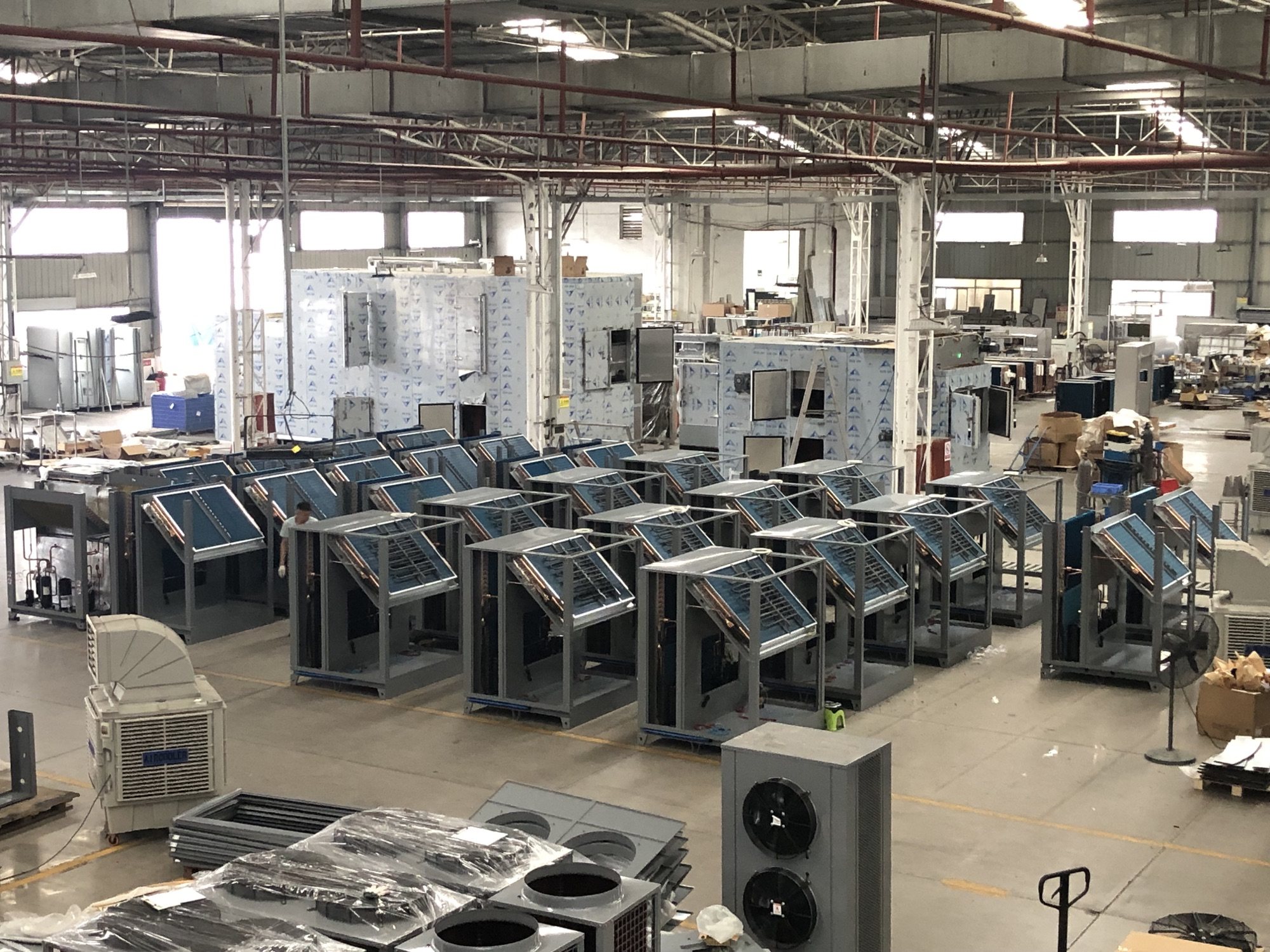
The workshop image shows multiple heat-pump equipment assemblies and related components in a production environment. It supports the factual statement that equipment assembly is taking place. It does not, by itself, prove annual output, staff count, certification, testing scope or delivery capacity.
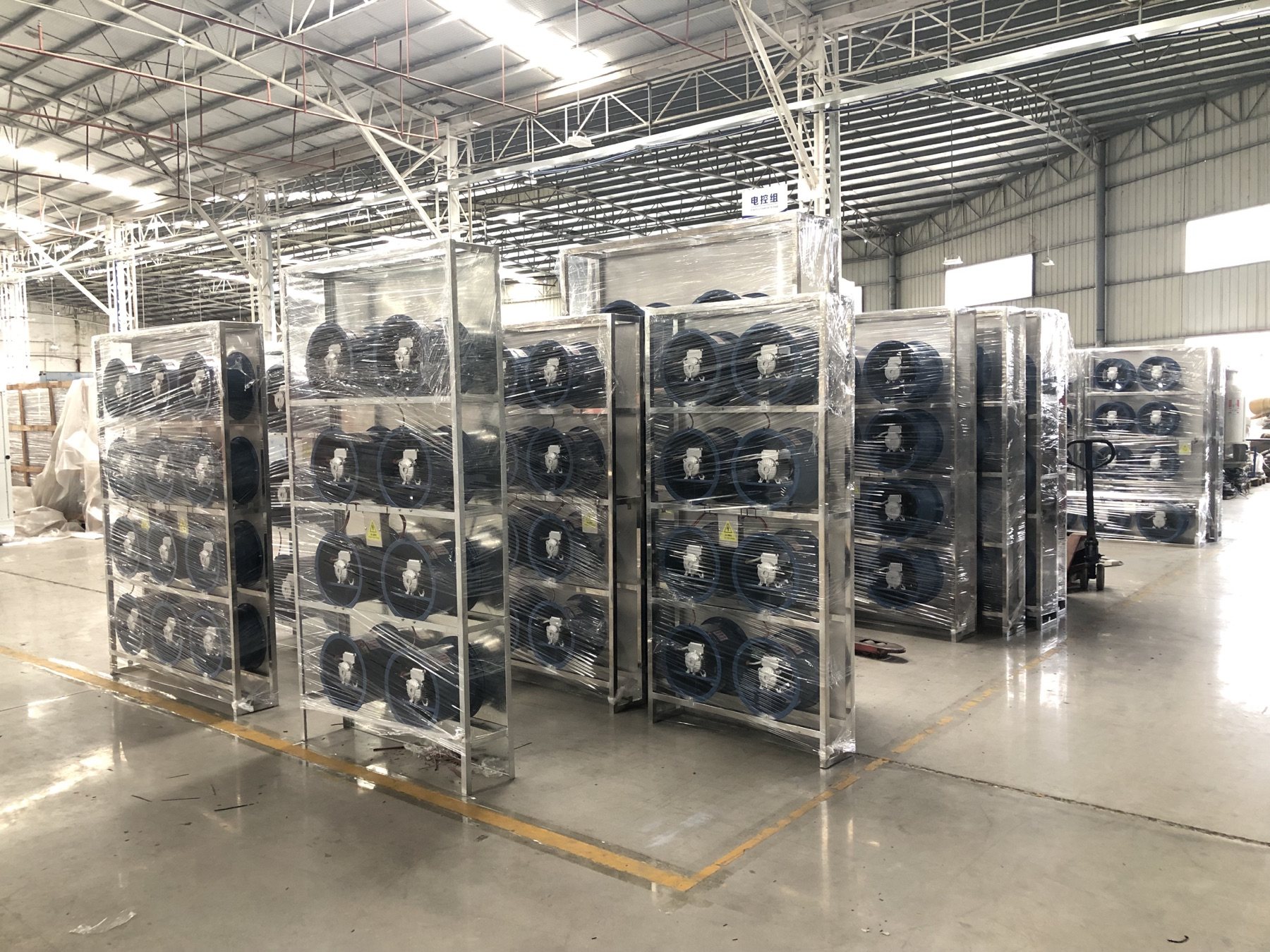
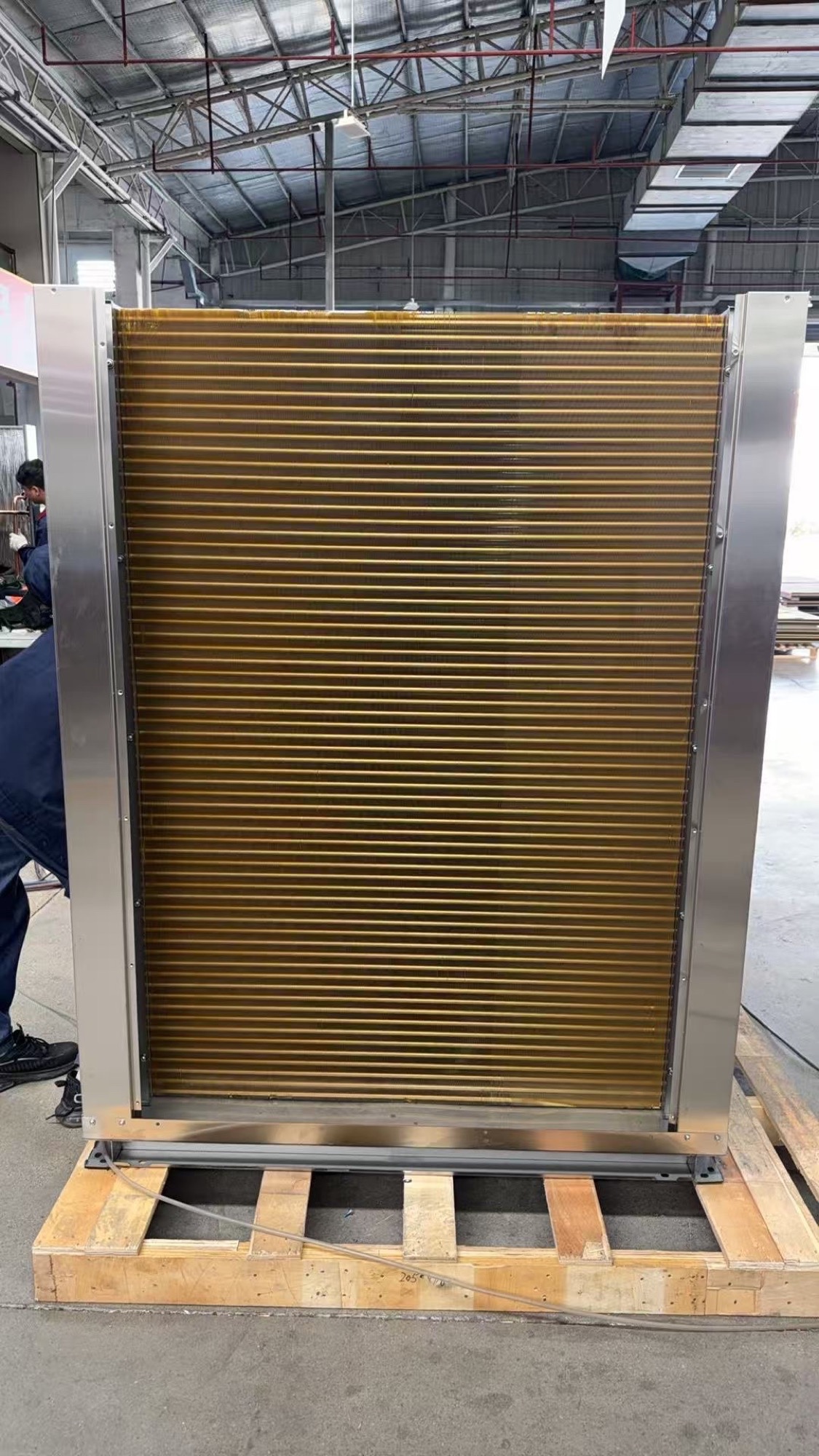
The adjoining authentic photographs show airflow fan assemblies and a heat-exchanger coil used for process-air conditioning. Exact duties depend on the project configuration and are not assigned from photographs alone. Buyers should connect component evidence to the approved equipment list and drawings.
Look beyond a catalogue machine.
Input Discipline
Does the supplier ask for material preparation, wet-basis moisture definitions, batch workflow and endpoint method?
System Coordination
Are room, airflow, heat-pump equipment, moisture path and controls reviewed as one process?
Document Traceability
Can the equipment list, layouts and control description be tied to a current revision and agreed scope?
Limits and Responsibilities
Are site work, utilities, local compliance, material trials and commissioning responsibilities clearly identified?
What HPDRYER needs before defining a direction
- Material: name, form, dimensions, preparation and sensitivity to heat, oxidation or surface damage.
- Moisture: initial and target basis, endpoint method and any representative test data.
- Throughput: batch mass, daily target, available operating hours and loading/unloading allowance.
- Room and loading: available dimensions, tray or trolley arrangement and access workflow.
- Site: ambient conditions, electrical supply, drainage, ventilation and delivery access.
- Controls: stages, sensors, alarms, records and interfaces expected by the buyer.
Use the industrial dryer RFQ guide and buyer selection checklist to organize this information.
Keep configuration changes visible before release.
When a room dimension, loading plan or utility condition changes, the buyer should ask which equipment, airflow, control and document outputs are affected. A controlled revision process helps prevent an older layout or equipment list from directing manufacture. Before release, reconcile the current drawings, component schedule, interfaces, access requirements and open technical questions with the quoted supply boundary.
Manufacturer evaluation questions
Does a factory photograph prove production capacity?
No. It documents a visible scene at one time. Production capacity requires separate verified records.
Should a buyer select equipment from fresh-material mass alone?
No. Moisture duty, time, loading, airflow, climate and operating constraints are also required.
Is every project supplied with the same documents and tests?
No. Deliverables and verification scope should be stated in the project contract and configuration.
Can one architecture fit every material?
No. Open-loop, closed-loop and room arrangements require project-specific review.
Connect company evidence with engineering detail.
Prepare an evidence-led system review.
Share the available material, moisture, capacity, room, utility and control information so the project assumptions can be identified.