
Industrial Heat Pump Dryer Troubleshooting Guide
Industrial dryer troubleshooting should begin with safe observations and a clear symptom record. Operators can document material condition, displayed values, airflow symptoms, drainage, alarms and operating stage, but should not bypass interlocks, open energized cabinets or handle refrigerant. The purpose of an initial check is to provide useful evidence for the responsible technician, not to replace electrical, refrigeration or mechanical service.
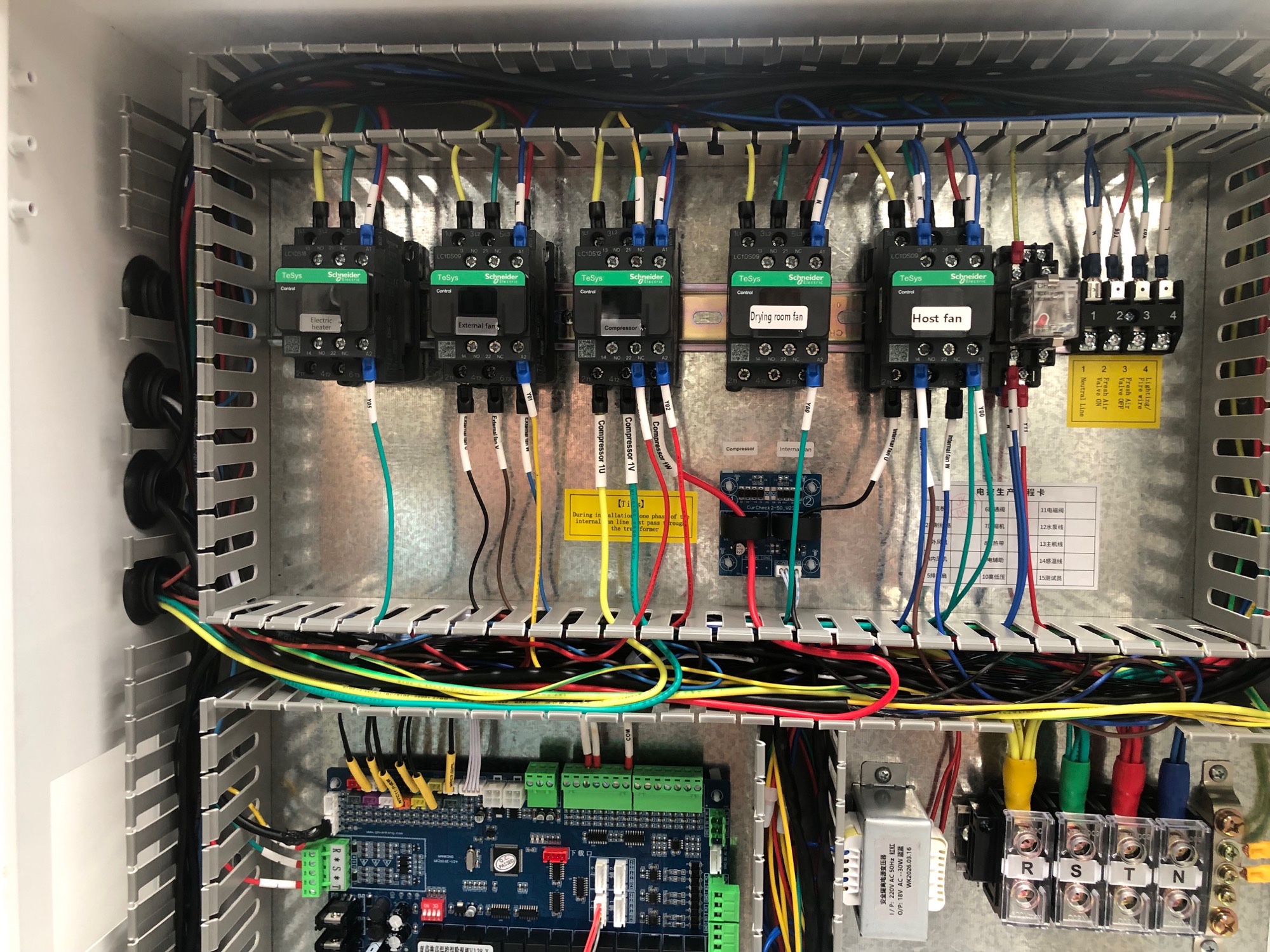
Troubleshoot the heat-pump dryer system safely
Equipment troubleshooting concerns the heat-pump dryer as a system. Start with safe external observations such as alarms, displayed values, fan operation, drainage and control sequence. Do not bypass interlocks, open energized cabinets or handle refrigerant; escalate equipment, electrical and refrigeration findings to qualified personnel.
Begin with the operating state: normal run, warm-up, alarm, shutdown or restart. Record the time, batch identity, material preparation, displayed temperature and humidity, fan state, drain observation and alarm text. Do not repeatedly reset a fault without understanding the reset condition and the operating manual.
Record the variables that shape the observation
Process result
Record where the material differs, when the change began and whether the pattern repeats. Include loading and material information.
Displayed values
Record temperature, humidity, setpoints and trends without assuming that a plausible number proves sensor accuracy.
Airflow observation
Check only safe external indicators such as unusual blockage, visible obstruction or changed sound. Do not enter hazardous areas or remove guards.
Drainage
Record leaks, standing water or an unusual change in collection. Do not treat drain quantity alone as a complete moisture balance.
Alarm and escalation
Capture alarm text, timestamp and operating state. Escalate electrical, refrigeration, safety and repeated trip conditions.
Use a defined check rather than a single assumption
| Observation or input | Purpose | Risk if incomplete | Review direction |
|---|---|---|---|
| Drying result changes | Material, loading, airflow or control condition | Record batch and displayed process data | Pause comparison and review the changed input |
| Temperature does not reach setpoint | Heat-transfer, airflow, sensor or control area | Check alarm state and safe external conditions | Escalate if persistent or accompanied by a trip |
| Humidity falls slowly | Moisture load, air path, drain or sensor area | Check loading record, drain observation and trends | Request technical review; do not assume a single cause |
| Airflow sounds different | Fan, obstruction or mechanical area | Observe externally and record timing | Stop and escalate if vibration, rubbing or unsafe condition appears |
| Alarm or repeated trip | Control, electrical, safety or refrigeration area | Record exact alarm and do not bypass it | Use qualified service personnel and the equipment procedure |
Separate evidence from interpretation
Troubleshooting is strongest when it follows a repeatable sequence: protect people and the equipment, preserve the fault information, check safe external conditions, compare the current state with the operating record, and escalate to the responsible technical scope. A display reset may remove evidence, so capture alarms and trends first when safe.
Operators should not open energized electrical cabinets, defeat a safety interlock, alter protective settings, connect unapproved instruments or handle refrigerant. Mechanical guards, pressure systems and rotating equipment require the site safety procedure. The service record should state which checks were observational and which require a qualified technician.
Define the evidence before a decision
For industrial heat pump dryer troubleshooting guide, collect the material description, preparation method, initial and target moisture basis, batch or operating schedule, loading arrangement and available room information. Record the instrument locations, measurement method and any known site constraints. Separate measured observations from estimates and identify missing data. This makes the technical discussion easier to audit and prevents a trial or symptom from being treated as a universal design value. The final recommendation depends on the confirmed project inputs, applicable safety procedures and a project-specific engineering review. Keep the original records available so later conclusions can be traced to the observed conditions.
Safe initial-check boundary
- Stop or isolate the process when the manual, alarm or site procedure requires it.
- Do not bypass interlocks or continue operation after a repeated safety trip.
- Do not open energized cabinets or work on wiring without qualified authorization.
- Do not handle refrigerant or open the refrigeration circuit as an operator task.
- Record alarm text, trends, material condition and operating stage for escalation.
Continue the technical review
Questions buyers and operators often ask
Can an operator reset every alarm?
Only when the approved operating procedure permits it and the cause is understood. Repeated trips should be escalated.
Is slow drying proof of a failed heat pump?
No. Material, loading, airflow, moisture path, sensor and control conditions should be separated.
What information helps a service technician?
Alarm text, time, batch and material data, displayed trends, loading arrangement, drain observations and recent changes.
Can operators open the control cabinet to inspect it?
Not unless they are qualified and authorized under the applicable electrical safety procedure. This guide does not instruct energized work.
Discuss the process with HPDRYER
Share the material condition, moisture basis, capacity, room, climate and control information available for an engineering review.