
How a Heat Pump Dryer Works
A heat pump dryer moves heat through a refrigeration cycle while process air carries moisture away from the material. The useful system is not the heat pump alone: the air path, drying room, loading arrangement, moisture-discharge method, sensors and control sequence must operate as one process.
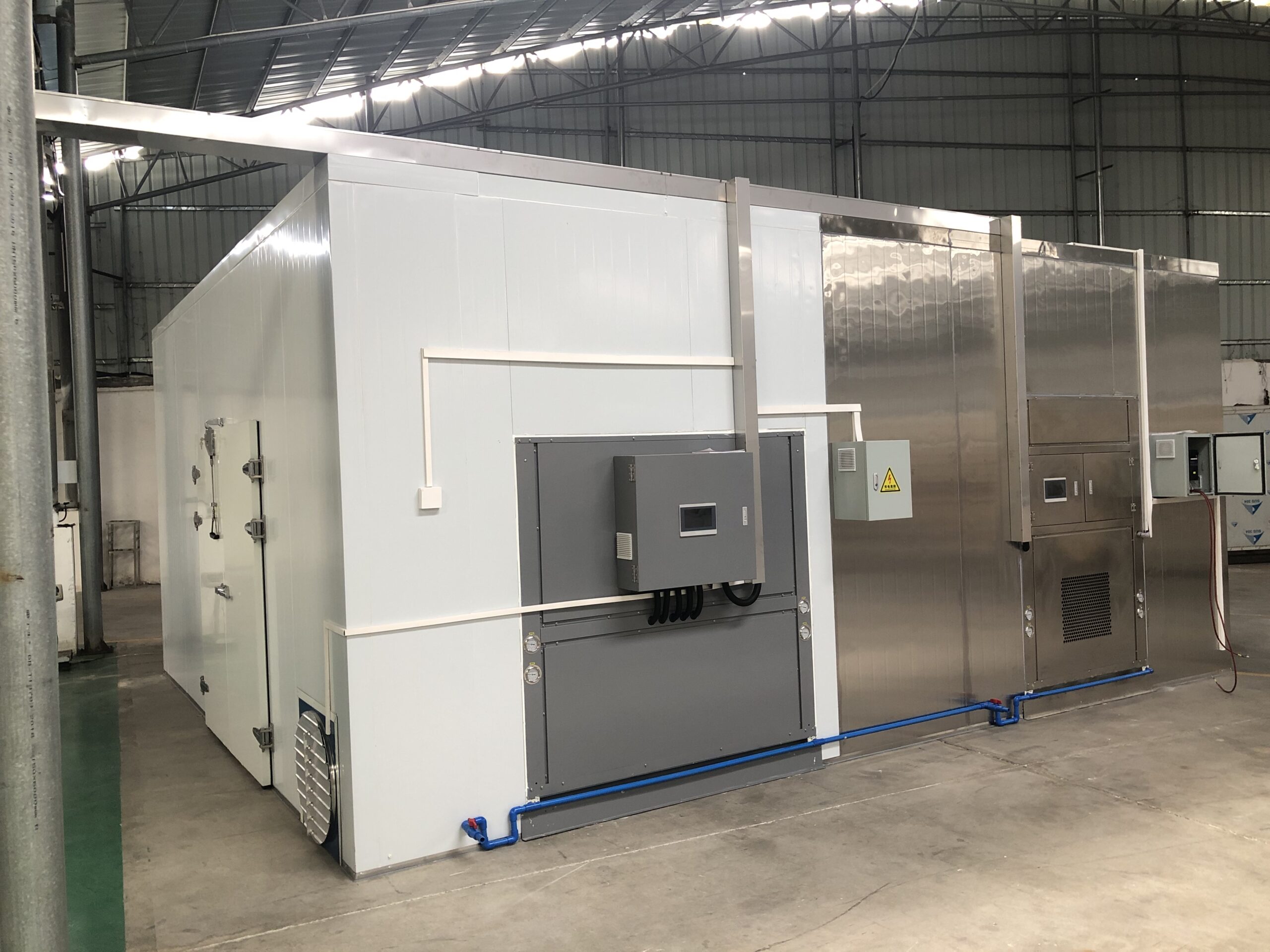
Heat is transferred and process air is managed.
At a high level, refrigerant circulates through compression, heat rejection, expansion and heat absorption. On the air side, a heat exchanger can warm process air before it enters the material zone. The warmer air can accept moisture evaporating from the material, but evaporation alone does not complete the process. The moisture must then be discharged through exhaust air or removed by cooling and condensation, depending on the selected architecture.
Move Heat
The refrigeration circuit transfers heat between heat exchangers rather than creating a drying result by temperature alone.
Condition Air
Process air is heated or otherwise conditioned for the material and the intended drying stage.
Pick Up Moisture
Air passes through or across the loaded material and carries evaporated moisture away from its surface.
Remove Moisture
Moisture leaves through planned exhaust or is condensed from recirculated air and drained from the system.
Four components support heat transfer.
Compressor
Raises refrigerant pressure and supports circulation through the heat pump circuit. Selection depends on the complete operating envelope.
Condenser
Rejects heat from the refrigerant. In a drying system this heat can be used to warm the process-air stream.
Expansion Device
Reduces refrigerant pressure before the heat-absorption stage. It is part of the refrigeration circuit, not a drying-air control by itself.
Evaporator
Absorbs heat and may cool moist air below its dew point when condensation is part of the moisture-removal path.
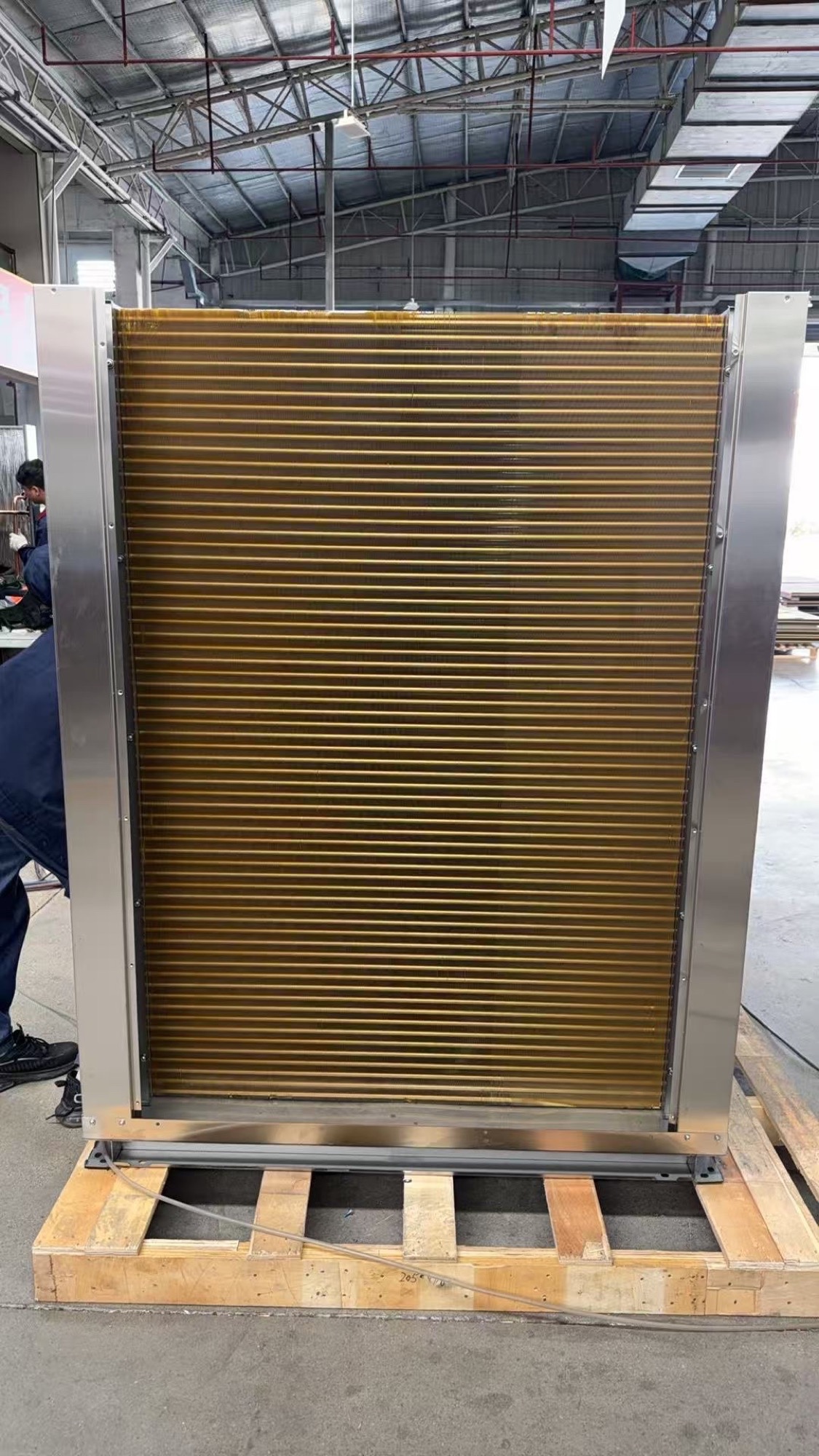
Open-loop and closed-loop systems manage moisture differently.
| Review point | Open-loop path | Closed-loop path |
|---|---|---|
| Process air | Fresh air enters, is conditioned, passes the material and is exhausted. | Process air is recirculated through a defined drying and moisture-removal circuit. |
| Moisture discharge | Water vapor leaves mainly with the exhaust-air stream. | Moisture can be condensed from the recirculated air and removed as condensate. |
| Ambient influence | Outdoor temperature and humidity directly affect intake-air conditions. | The room envelope and recirculated-air circuit have greater influence, although the installation environment still matters. |
| Engineering focus | Intake, exhaust, climate, air balance and room pressure. | Condensation duty, condensate handling, room leakage, recirculation and controls. |
Neither air path is universally better. Selection depends on material sensitivity, moisture load, site climate, room design and operating requirements. See the open-loop versus closed-loop engineering comparison.
The dryer must distribute conditioned air through the real load.
Fans, ducts, supply openings, return paths, trays, trolleys and product depth influence how evenly the air reaches the material. A temperature reading near the machine does not prove that every tray sees the same condition. Sensor positions should represent the process, and the PLC sequence should coordinate fans, heat-pump operation, exhaust or condensation functions, alarms and stage transitions.
- Room: dimensions, insulation, doors, leakage and maintenance access.
- Loading: tray spacing, product depth, trolley arrangement and blocked air paths.
- Airflow: supply direction, return location, pressure loss and bypass prevention.
- Controls: temperature, humidity, sensor positions, alarms and operating stages.
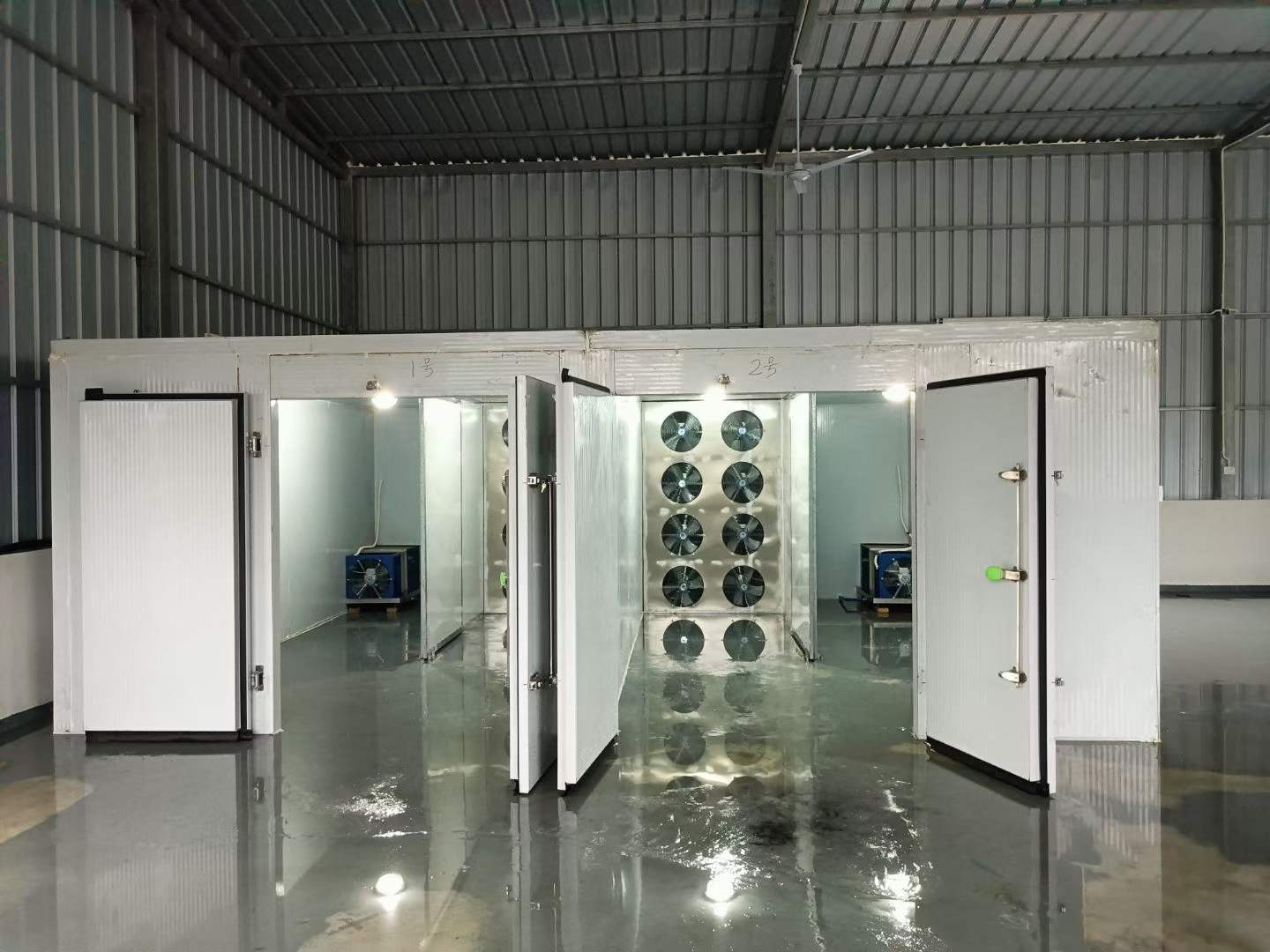
Information needed before equipment selection.
Material
Form, dimensions, preparation, temperature sensitivity and handling method.
Moisture
Fresh mass, initial and target moisture on a consistent basis, and available test data.
Production
Batch quantity, daily throughput, loading time, unloading time and operating hours.
Installation
Climate, electrical supply, room constraints, drainage, intake, exhaust and access.
Continue from principle to project planning.
Connect the drying principle to your material.
Share the material, moisture, capacity, climate, loading and site information available for an HPDRYER engineering review.