
Industrial Agricultural Product Heat Pump Drying Systems
Agricultural drying can involve grains, seeds, roots, pods or other harvested materials with very different particle size, bulk density, moisture load and batch handling. The system brief must identify the real crop and loading form.
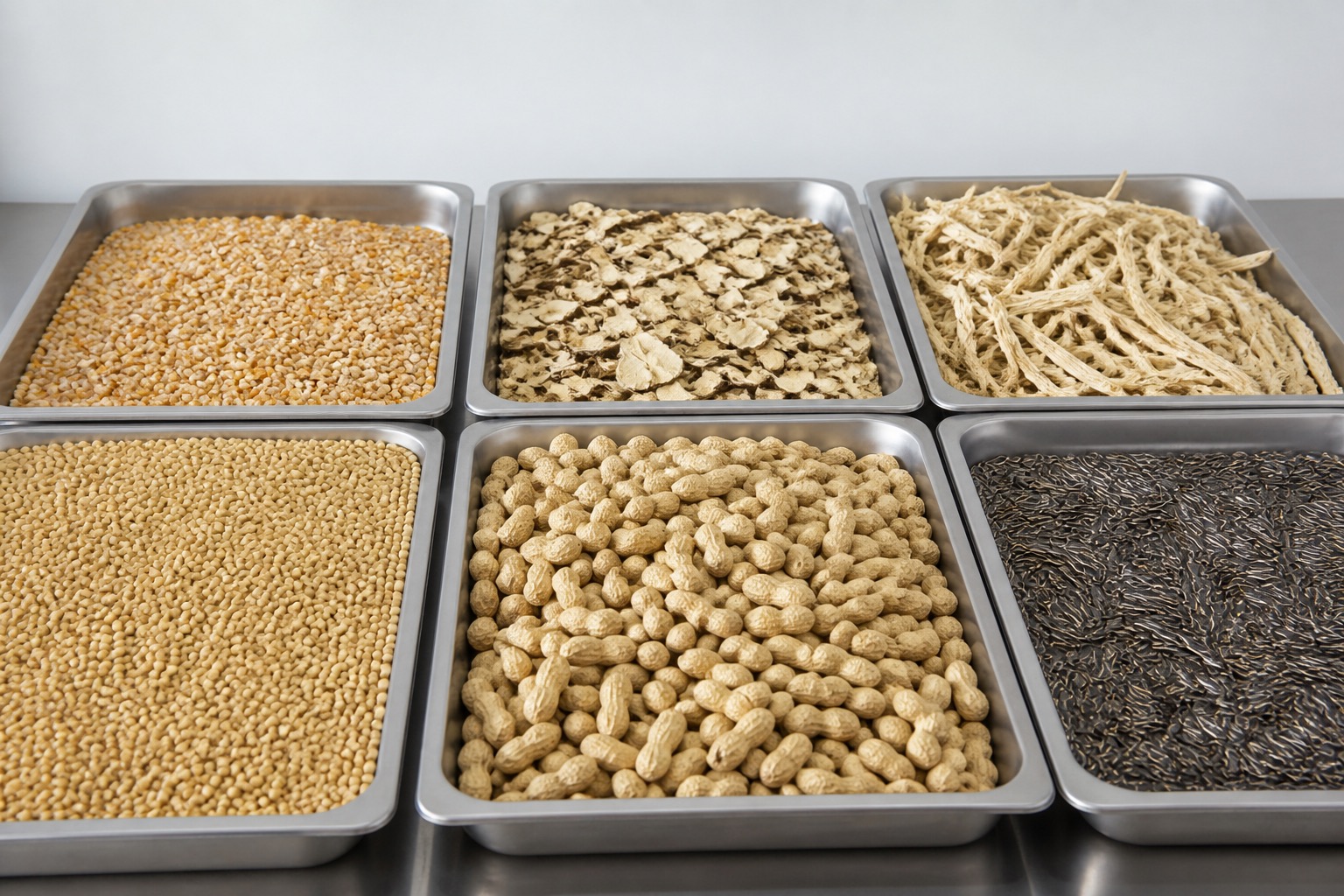
Particle form and bulk density affect loading and airflow
Loose grain and seed beds behave differently from sliced roots or larger harvested pieces. Fine material can increase resistance or pass through unsuitable mesh, while irregular roots may leave large voids. Seasonal incoming condition and foreign-material handling should also be explained in the process brief.
Batch handling may use trays, racks, bins or another customer-defined arrangement. HPDRYER needs the bed depth, container dimensions and loading sequence to connect moisture removal with room volume and practical workflow.
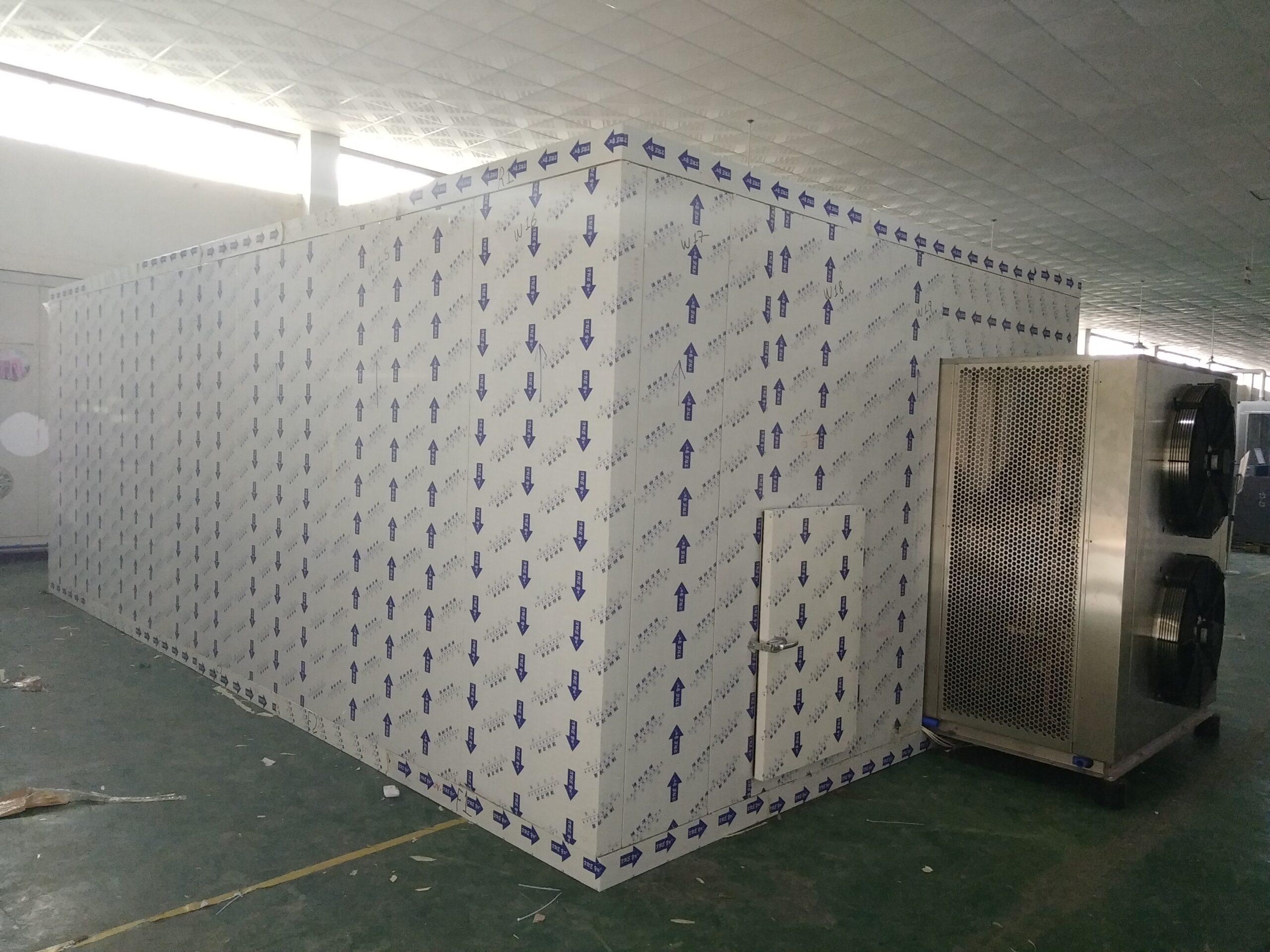
Project information HPDRYER reviews
Crop definition
State the crop, variety when relevant, harvested condition and whether it is grain, seed, root, pod or prepared material.
Bulk behavior
Provide particle dimensions, bulk density if known, planned bed depth and tendency to compact or bridge.
Batch handling
Describe filling, leveling, turning if used, unloading and the available operating schedule.
Moisture and site
Share fresh quantity, moisture data, climate, power supply, room constraints and moisture discharge conditions.
Bulk beds require a defined resistance and return-air review
Airflow planning depends on whether air passes across, through or around the material layer. Container walls, mesh, bed depth and loading uniformity can all create bypass or high-resistance zones and should be included in the room design.
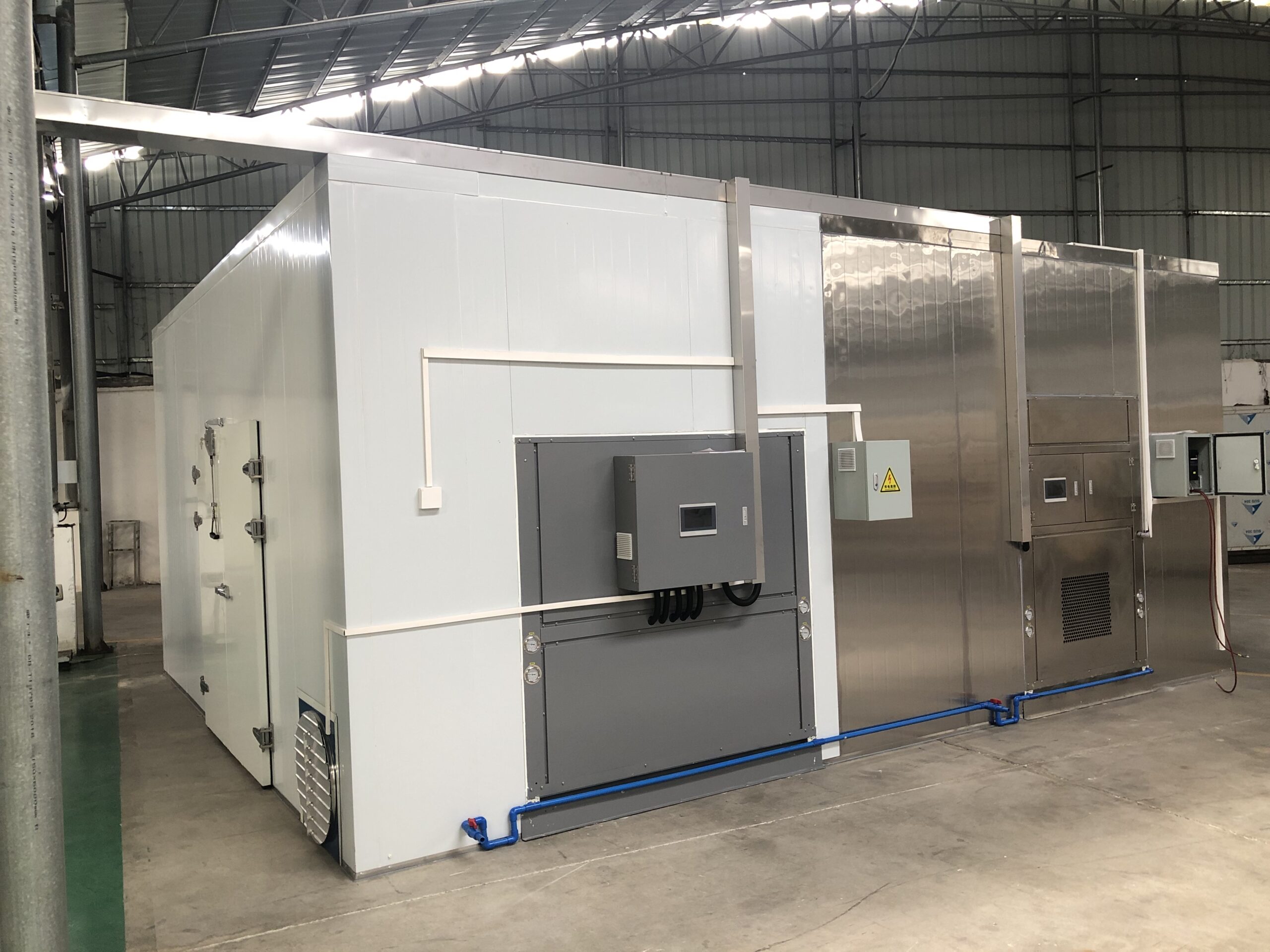
Connect the moisture path with the room and site
Local climate and the selected moisture-discharge path influence architecture review. Open-loop and closed-loop arrangements may both be considered, but crop name alone does not define equipment configuration, control logic or room integration.
Compare system architecture for industrial agricultural product.
Information needed for engineering review
Provide the available industrial agricultural product process facts and identify any values that still require testing or confirmation.
- Crop and harvested or prepared form
- Particle size and bulk density when known
- Fresh batch quantity and moisture data
- Bed depth, tray, bin or rack arrangement
- Loading and unloading workflow
- Climate, power and available installation space
Continue the engineering review
Define an agricultural drying requirement
Send the available industrial agricultural product material, moisture, capacity, loading and site information for project-specific review.