
Material Drying Test and Process Validation
Material testing connects a real product and loading method to the engineering decisions for a drying system. A useful trial records more than final drying time: it documents sample preparation, fresh mass, moisture basis, temperature, humidity, loading, intermediate mass and quality observations. Test results support planning, but they do not automatically guarantee full-scale production performance because scale, airflow, room geometry and material variation still require review.
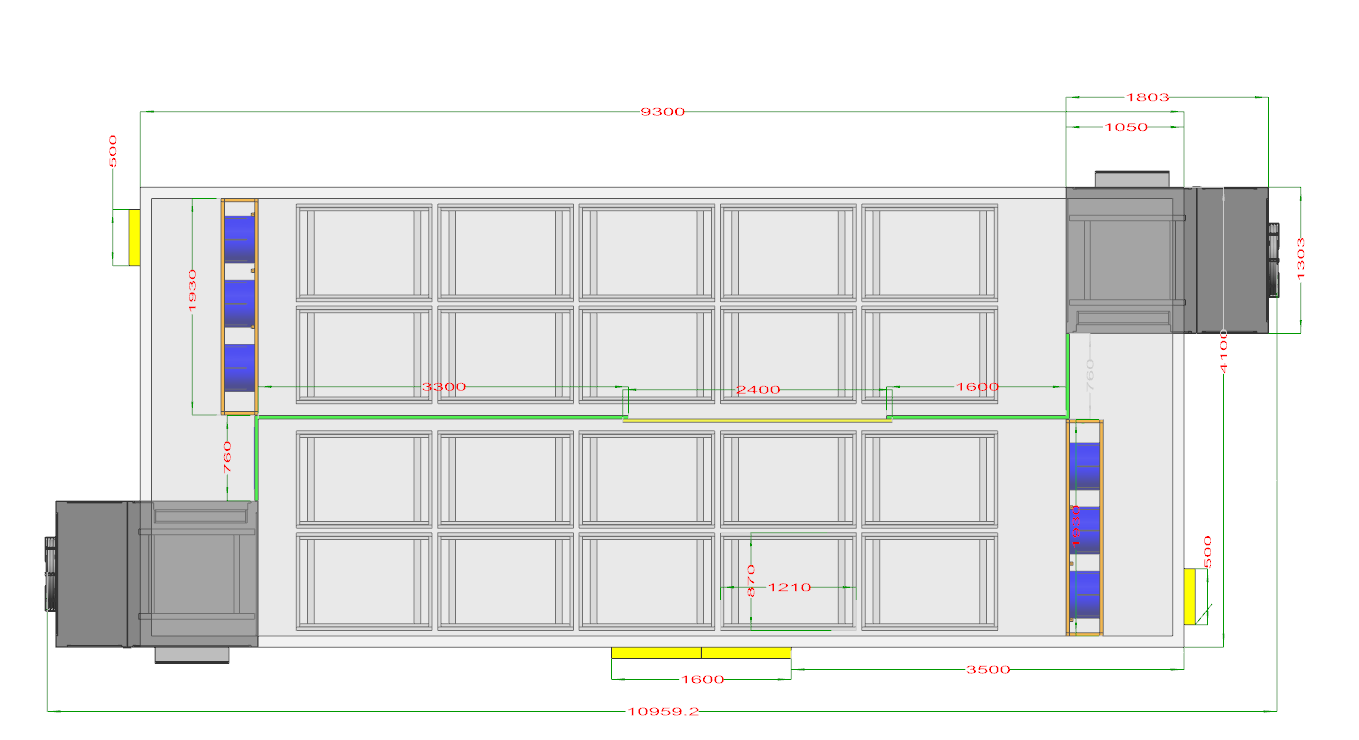
Build a material test record that can be reviewed
A material drying test is a traceable measurement record for a defined sample. Record preparation, fresh mass, moisture basis, loading condition, air observations and quality changes using a consistent method. The record describes that material test; it is not by itself a production guarantee or a substitute for scale-up review.
Define the sample and measurements before collecting data
Representative material
State the source, maturity or condition where relevant, preparation method and expected lot variation. Do not silently substitute a different material form.
Moisture definition
Record whether moisture is wet-basis or dry-basis, the method used and the initial and target definitions.
Loading basis
Record tray type, layer condition, fresh mass, spacing and any trolley or rack arrangement used in the test.
Endpoint
Define moisture and quality criteria separately. A time endpoint alone may not establish the required result.
Repeatability
Plan comparable runs or samples so a single unusual result is not treated as a universal process value.
Use a traceable test record
| Trial input or measurement | Purpose | Record | Decision use |
|---|---|---|---|
| Fresh mass and sample identity | Defines the tested load | Mass, lot, preparation and timestamp | Compare runs and calculate material duty |
| Initial and target moisture | Defines the endpoint basis | Basis, method and values | Interpret water removal without mixing definitions |
| Temperature and humidity | Defines air conditions | Location, instrument, time and trend | Relate material response to the process environment |
| Intermediate weights | Shows the response over time | Interval, mass and method | Identify changing rate and endpoint approach |
| Quality observations | Checks more than mass | Colour, shape, aroma, texture or agreed criteria | Decide whether the endpoint is acceptable |
| Load arrangement | Links result to airflow exposure | Tray, layer, spacing and room position | Assess scale-up and uniformity limitations |
Move from sample evidence to engineering review
- Define the material, preparation, moisture basis and target quality criteria.
- Mark the sample mass, tray arrangement, room position and instrument locations.
- Record temperature, humidity, mass and observations at planned intervals.
- Confirm the endpoint using the stated method instead of assuming that elapsed time is sufficient.
- Repeat comparable trials and record variation or missing data.
- Use the evidence to discuss room, airflow, capacity and control requirements, while keeping scale-up limitations visible.
The moisture-removal calculation and capacity page can organize the engineering discussion. The temperature and humidity page helps define air observations.
A successful test is evidence, not a guarantee
A sample or laboratory test may not reproduce the air distribution, room leakage, trolley arrangement, heat-transfer duty, control sequence or batch variability of a production system. Larger loads can change resistance and uniformity. Different preparation or moisture condition can change the endpoint. When moving from a test to an industrial proposal, identify which variables stayed constant, which changed and which remain unknown. The final equipment and process review should be based on the intended operating basis and any validated project data.
Questions buyers and operators ask
Is one sample enough?
It may be useful for an initial indication, but repeatability and material variation must be considered before a production decision.
Should the test record only weight?
No. Air conditions, loading, preparation and quality observations are needed to interpret weight change.
Can a test result guarantee a full-scale cycle?
No. Scale-up requires review of room, airflow, controls, moisture duty and operating variation.
Why state the moisture basis?
Wet-basis and dry-basis definitions are different. Mixing them can produce an incorrect moisture-removal interpretation.
What should be sent in an RFQ?
Send material form, fresh quantity, moisture data, target quality, loading method, available room information and any test records.
Connect the test to system planning
Discuss a material validation plan
Send available material and trial information to sales@hpdryer.com.
State what the test can support
At the end of a test, separate observations from decisions. The record may support discussion about moisture duty, material preparation, loading arrangement, measurement locations or the need for additional trials. It may also reveal that the endpoint definition is incomplete or the sample is not representative. Do not convert a sample result directly into a guaranteed production setting, capacity, energy result or quality statement.
Keep the test method, raw observations, calculations and deviations together. If a later design uses different trays, room dimensions, airflow paths or controls, mark those changes explicitly. This traceability helps the engineering team decide which results can be reused and which need confirmation under the proposed operating basis.