
Fruit and Vegetable Drying
Date and Jujube Drying Systems
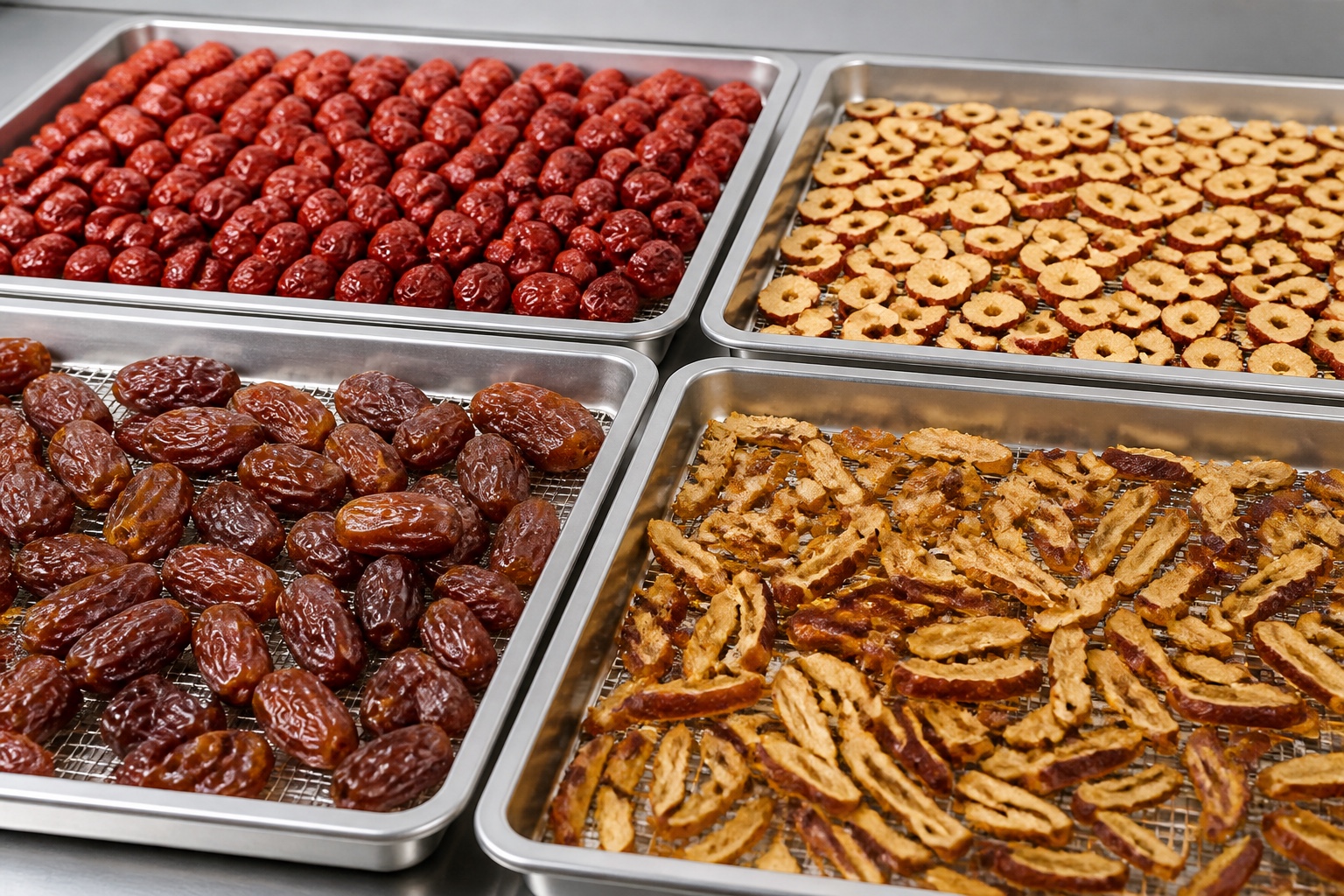
Whole, split, pitted and sliced dates or jujube have different skin resistance, internal moisture paths and loading requirements. HPDRYER evaluates the material condition and production method before configuring the drying room and controls.
Material Condition
Skin, size and preparation change the moisture path
Whole fruit may release moisture differently from split or sliced material. Size grading, maturity, pit removal and surface condition should be recorded because mixed loads can finish unevenly.
Data for engineering review
- Date or jujube type and harvest condition
- Whole, split, pitted or sliced form
- Size distribution and fresh batch mass
- Initial and target moisture when known
- Loading depth, tray type and required workflow
Engineering considerations
Internal diffusion
Thicker whole fruit can be governed by moisture movement from the center to the surface.
Batch uniformity
Size grading and consistent preparation reduce variation between trays and pieces.
Air distribution
Supply air should pass evenly across each tray and return without short-circuiting.
Control logic
Temperature and humidity steps require validation against the material and desired final condition.
Architecture and room integration
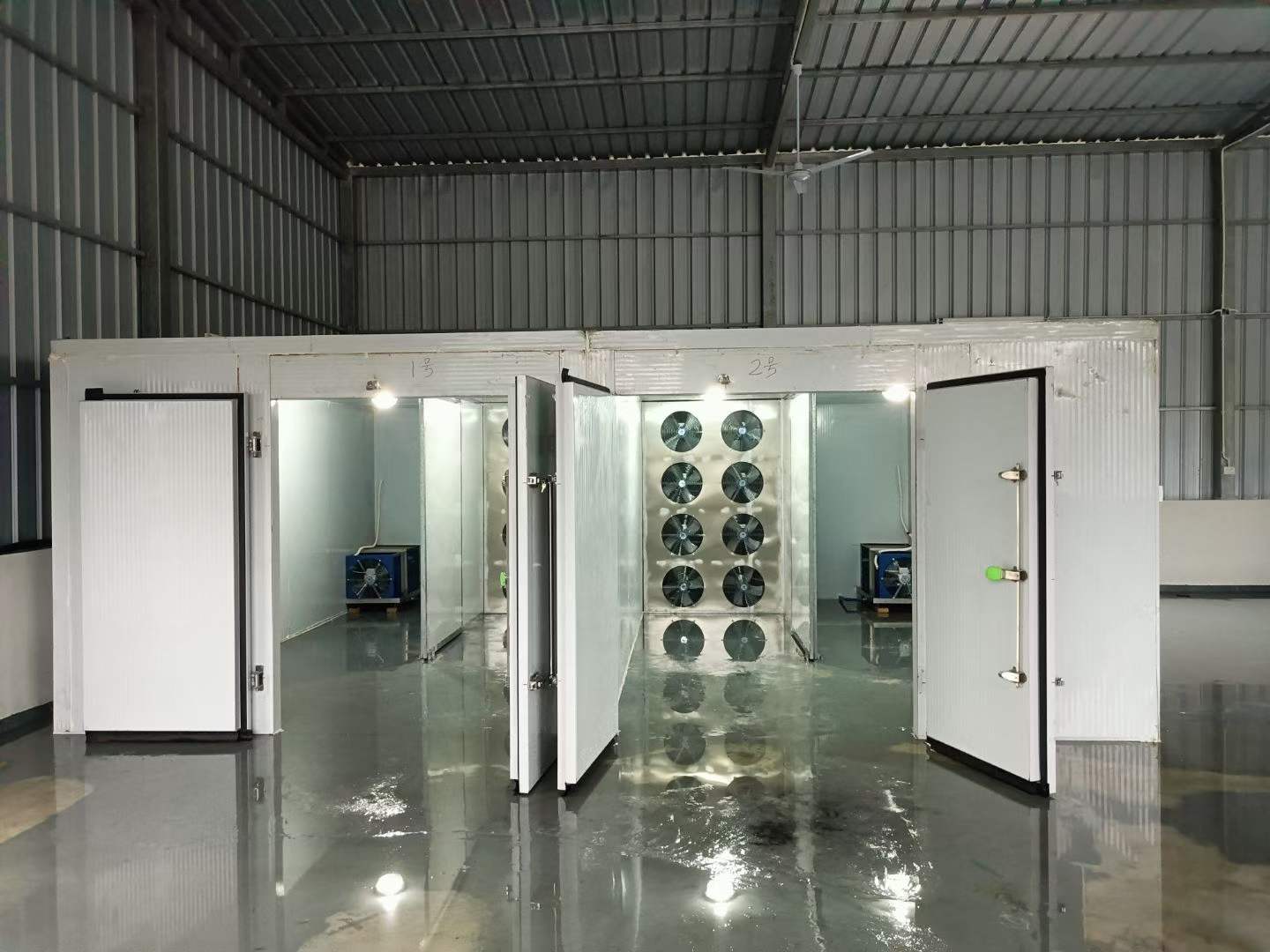
The moisture removal method, local ambient conditions, room envelope and control objectives guide open-loop or closed-loop evaluation. Loading density and airflow resistance remain central in either architecture.
Related planning pages
Project Review
Define the date or jujube material before system selection
Provide the material form, size range, fresh quantity and final moisture requirement when available.