
SMER in Industrial Drying
Quick Answer
Specific Moisture Extraction Rate, or SMER, expresses how much water a dryer removes per unit of electrical energy. It is normally reported as kilograms of water removed per kilowatt-hour, kg water/kWh. Calculate it only from a defined test period, a defensible water-removal value and the total electrical energy inside the stated boundary. SMER does not by itself prove product quality, capacity or suitability.
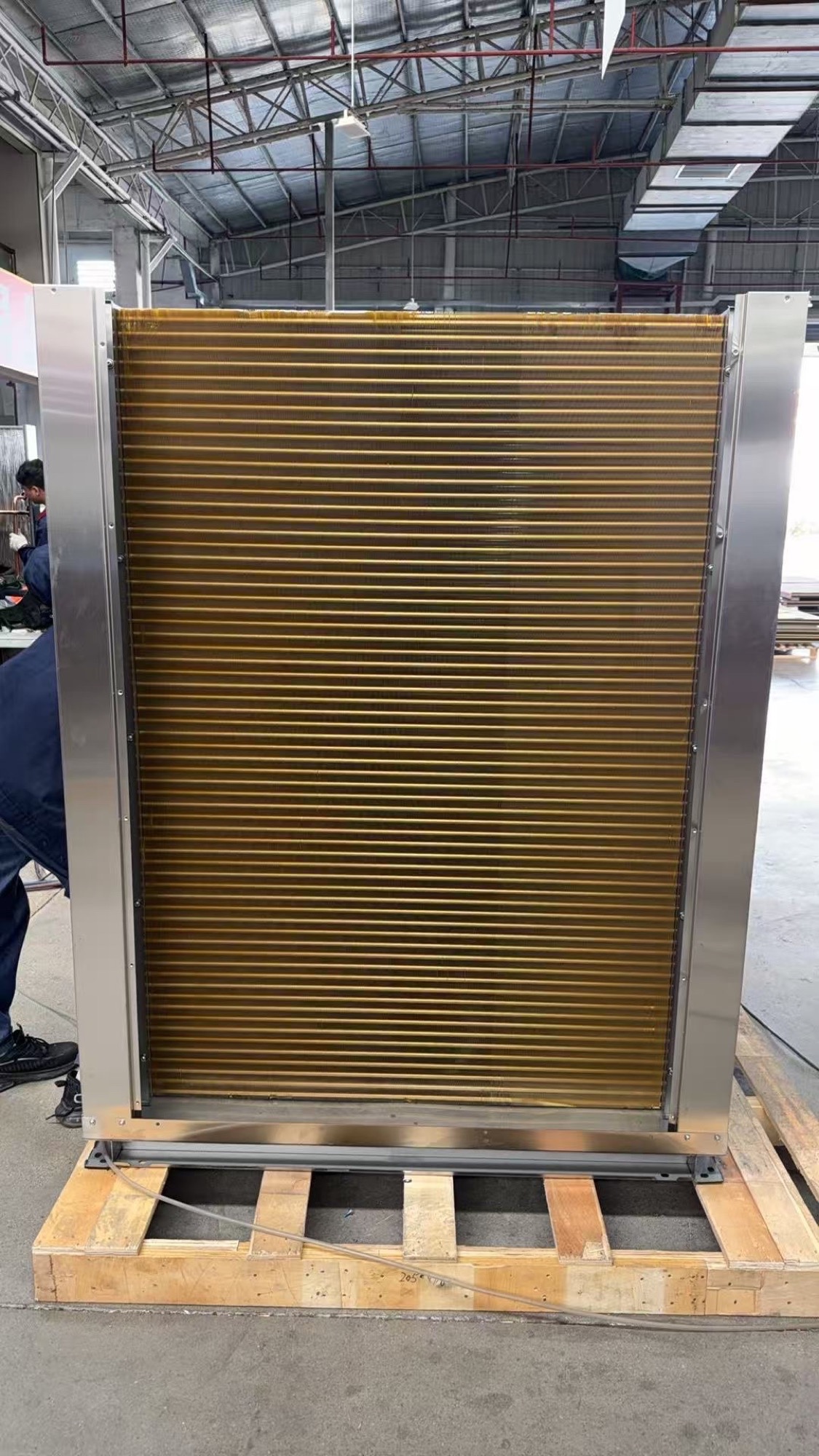
SMER links measured water removal with measured energy.
SMER = mass of water removed / electrical energy consumed
Unit: kg water/kWh
The numerator is water removed from the material during the agreed period. The denominator is the electrical energy consumed by the loads included in the test boundary. Published experimental heat-pump dryer studies use SMER as water removed per unit energy; an Applied Energy experimental study reports the metric in kg water/kWh. NIST defines the watt as power and the kilowatt-hour as energy, supporting the required distinction between kW and kWh.
Record what was measured and for how long.
| Boundary item | Required record |
|---|---|
| Test start and stop | Define whether the period includes warm-up, active drying, cooldown and interruptions. |
| Material condition | Record material form, preparation, initial mass, final mass and moisture basis. |
| Electrical loads | Identify compressors, fans, heaters, pumps, controls and other auxiliaries included by the meter. |
| Operating conditions | Record temperature, humidity, airflow settings, ambient condition, door openings and control stages. |
| Endpoint | State how final moisture or the process endpoint was sampled and verified. |
A test that excludes fans cannot be compared directly with a test that includes every process-air fan. A short high-moisture period cannot represent a complete batch that includes the falling-rate stage. The boundary and period are part of the result, not optional notes.
Use consistent mass and moisture data.
Water removed may be determined from reliable inlet and outlet mass measurements when no material is lost, or from a dry-solids mass balance when initial and target moisture are known on the same basis. The industrial moisture removal calculation shows a wet-basis method. Sampling must represent the complete load; a surface sample or one tray may not represent wetter locations.
- Mass balance: distinguish water loss from product loss, trimming, spillage or sampling.
- Moisture basis: do not mix wet-basis and dry-basis percentages.
- Endpoint: use the same defined endpoint for every repeated test.
- Scale resolution: select weighing equipment appropriate to the expected mass change.
Include the loads required to create the measured result.
Heat-Pump Circuit
Include all compressors and refrigeration auxiliaries operating inside the system boundary.
Air Movement
Include process, return, exhaust and relevant heat-exchanger fans required during the test.
Auxiliary Heat
Include resistance heaters or other electrical heating used for startup, stages or temperature support.
Controls and Pumps
Include PLC, actuators, condensate pumps and project-specific electrical auxiliaries when they fall inside the boundary.
Keep the example separate from equipment claims.
Hypothetical example: assume verified batch records show that 80 kg of water was removed while the defined electrical boundary consumed 120 kWh. The illustrative SMER is 80 / 120 = 0.667 kg water/kWh. The reciprocal specific energy consumption is 120 / 80 = 1.50 kWh/kg water. These figures demonstrate the calculation only; they are not HPDRYER performance values or a prediction for another material.
For a repeated test, report meter accuracy, mass measurement method, material loading, test duration and operating conditions with the result.
Different test conditions can produce different SMER values.
Material structure, initial and final moisture, loading density, air resistance, climate, leakage, room losses, control stages and test duration can all change the measured ratio. A higher SMER can coincide with an unsuitable endpoint or slower production, so it should not be separated from product requirements and throughput.
| Metric | What it describes |
|---|---|
| SMER | Water removed per unit of electrical energy for the stated boundary and test. |
| COP | Heat-transfer output divided by power input for a defined heat-pump operating condition; it is not water removal. |
| Drying quality | Material-specific outcomes such as moisture uniformity, appearance, handling or other approved acceptance criteria. |
| Throughput | Fresh material processed per batch or per day under the complete operating schedule. |
None of these measures replaces the others. Review SMER with temperature and humidity control, airflow, endpoint quality and production requirements.
SMER measurement questions
Is SMER the same as COP?
No. SMER relates water removed to electrical energy. COP relates heat transfer to power input under a defined condition.
Can SMER be calculated from rated power?
Only as an unverified estimate. A defensible result uses measured kWh and measured or mass-balanced water removal.
Should preheating be included?
Include it when the reported boundary covers a complete batch. If excluded, state that clearly and do not compare it with full-cycle results.
Does a higher SMER guarantee better product?
No. Product endpoint, uniformity, process time and material-specific acceptance criteria require separate evaluation.
Connect SMER with the complete process record.
Define the measurement boundary before comparing performance.
Provide material, moisture, loading, operating schedule, energy-metering and endpoint information for an engineering review.