
How to Size a Heat Pump Dryer
Heat pump dryer sizing begins with material mass and moisture balance, then connects the required moisture-removal duty to effective process time, room loading, airflow, climate, architecture and controls. Equipment selection should follow verified process inputs rather than a single fresh-material capacity number.
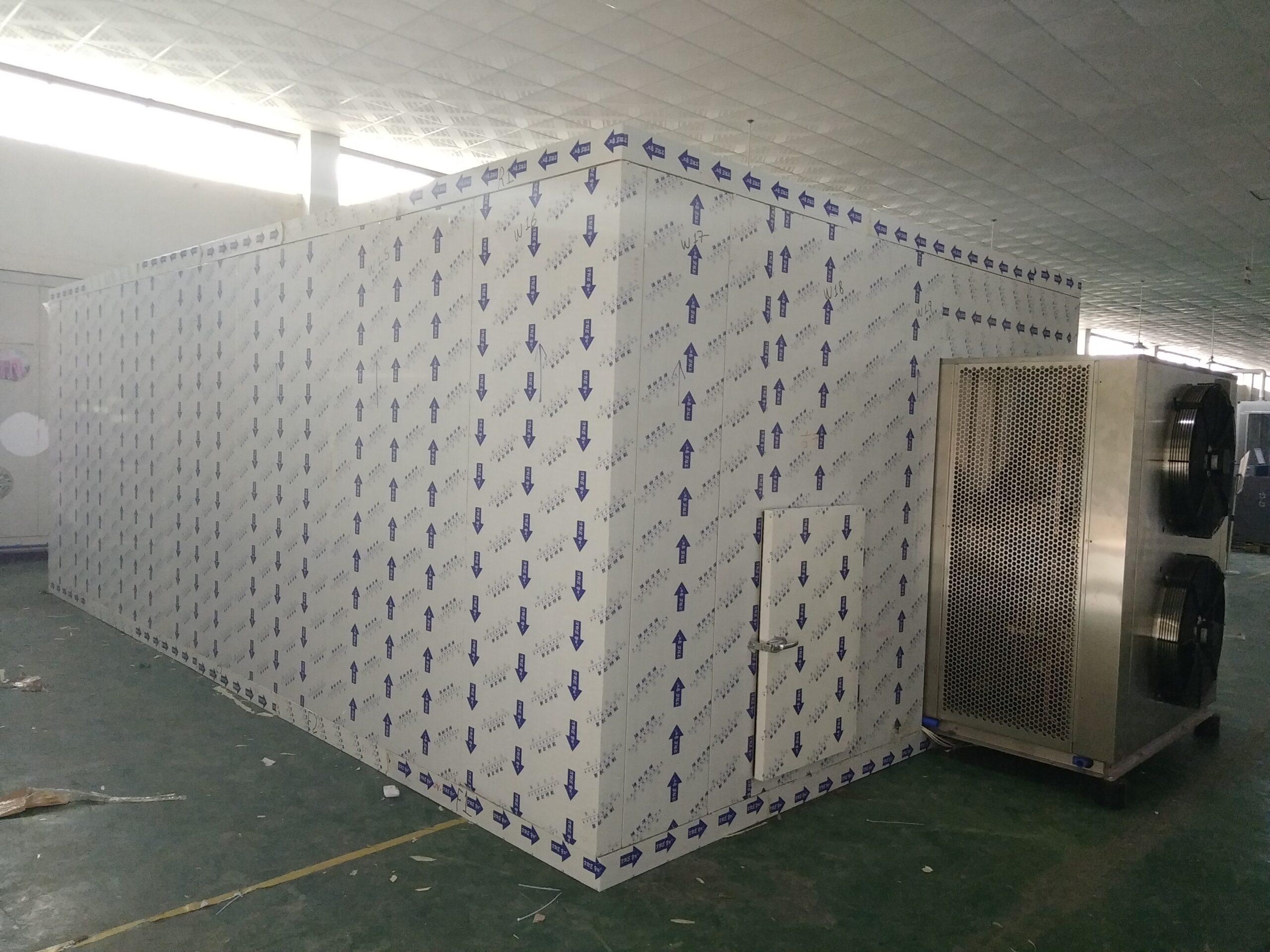
Estimate how much water the process must remove.
Start with fresh material mass, initial moisture and target moisture using one clearly stated moisture basis. For wet-basis values, dry-solids mass is preserved while the water content changes. The existing industrial moisture removal calculation explains the wet-basis mass balance and the difference between fresh mass, final product mass and estimated water removed.
Fresh Material Mass
Define the mass loaded per batch and whether the figure is measured before trimming, washing or other preparation.
Initial Moisture
Record the fresh-material moisture value, sampling method and whether it is wet basis or dry basis.
Target Moisture
State the desired endpoint and how it will be measured or otherwise verified.
Estimated Water Removed
Use the mass balance to estimate moisture duty before allowing for process uncertainty and project-specific losses.
Convert water removal into a planning rate.
A preliminary average duty can be expressed as:
required average moisture removal rate = estimated water to remove / effective drying time
Use consistent units, such as kilograms of water divided by hours. Effective drying time must come from validated material information, representative testing or an approved process basis. It is not the total shift length, and it should not be guessed from another material. This relationship is a planning tool, not an equipment-performance guarantee.
| Time element | Include in the review |
|---|---|
| Material preparation | Cutting, washing, draining, sorting or other steps before loading. |
| Loading | Time to fill trays, racks, trolleys, bins or other product supports. |
| Effective process time | Validated time during which the defined drying sequence operates. |
| Unloading and cleaning | Time required before the room can accept another batch. |
| Available operating hours | Real shift or daily schedule, including planned interruptions. |
Separate equipment duty from production throughput.
Batch capacity is the fresh material loaded for one cycle. Daily throughput depends on completed batches per day, not merely room size. Loading, drying, unloading, cleaning and operator availability all affect the schedule. The industrial dryer capacity calculation guide provides a planning framework without promising a fixed cycle time.
Confirm Batch Load
Define fresh mass, material form, product depth and number of loading positions.
Confirm Moisture Duty
Calculate estimated water removal using consistent initial and target moisture data.
Confirm Process Basis
Use validated material information or testing to establish the effective process time.
Check Daily Workflow
Fit complete batches into the actual operating schedule, including non-drying activities.
Size the air path around the loaded material.
Room volume by itself does not define useful capacity. Tray area, rack spacing, trolley positions, product depth and the resistance through the load affect air distribution. Supply and return paths should minimize bypass and reach the most difficult loaded positions. Fan duty must be reviewed with ducts, heat exchangers, filters and the real product arrangement.
- Loading density: product mass and depth per tray or loading area.
- Room geometry: usable process space, service zones, doors and clearances.
- Air path: supply direction, return position and pressure loss.
- Uniformity: sensor and test positions used to assess the loaded room.
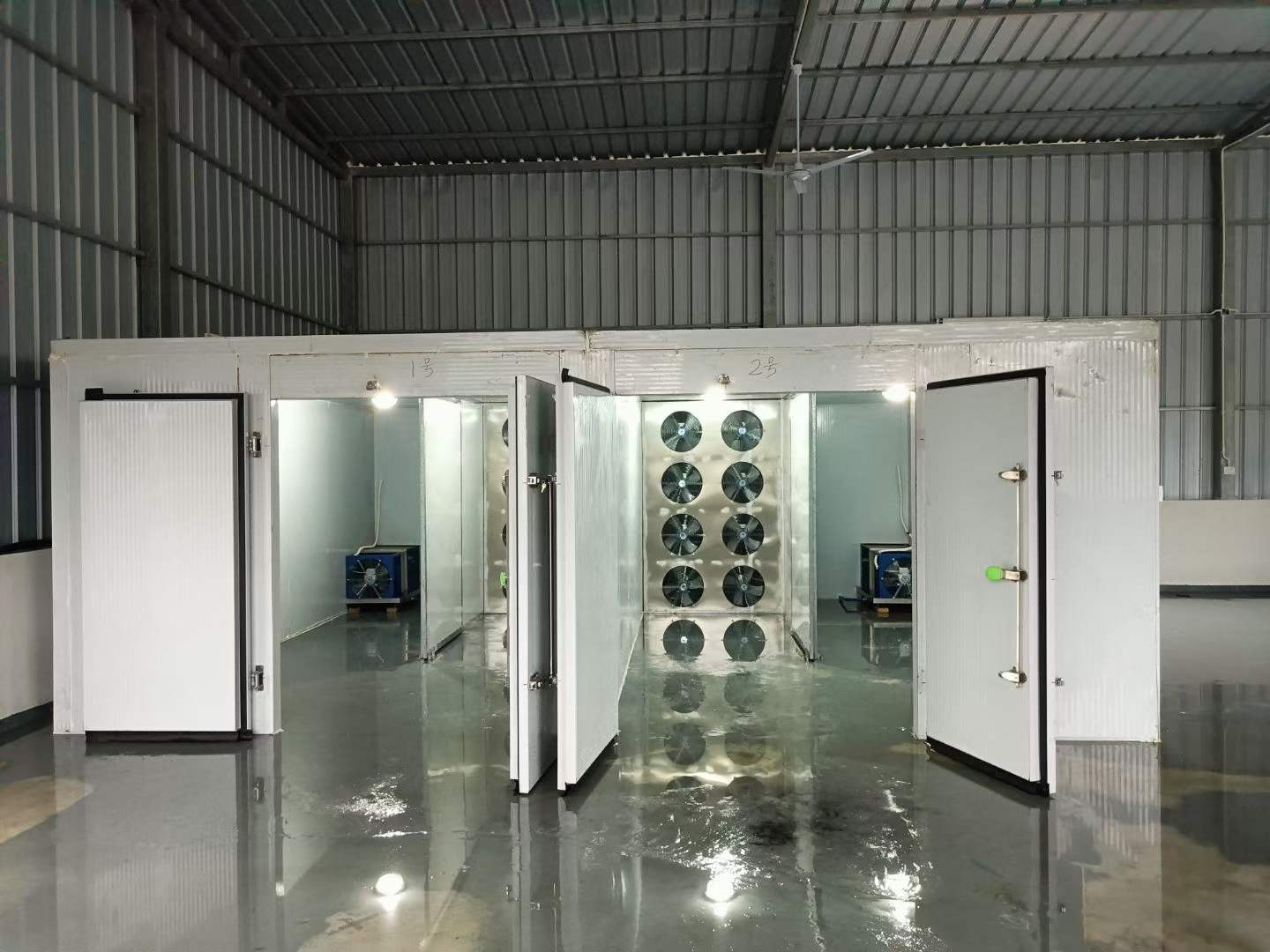
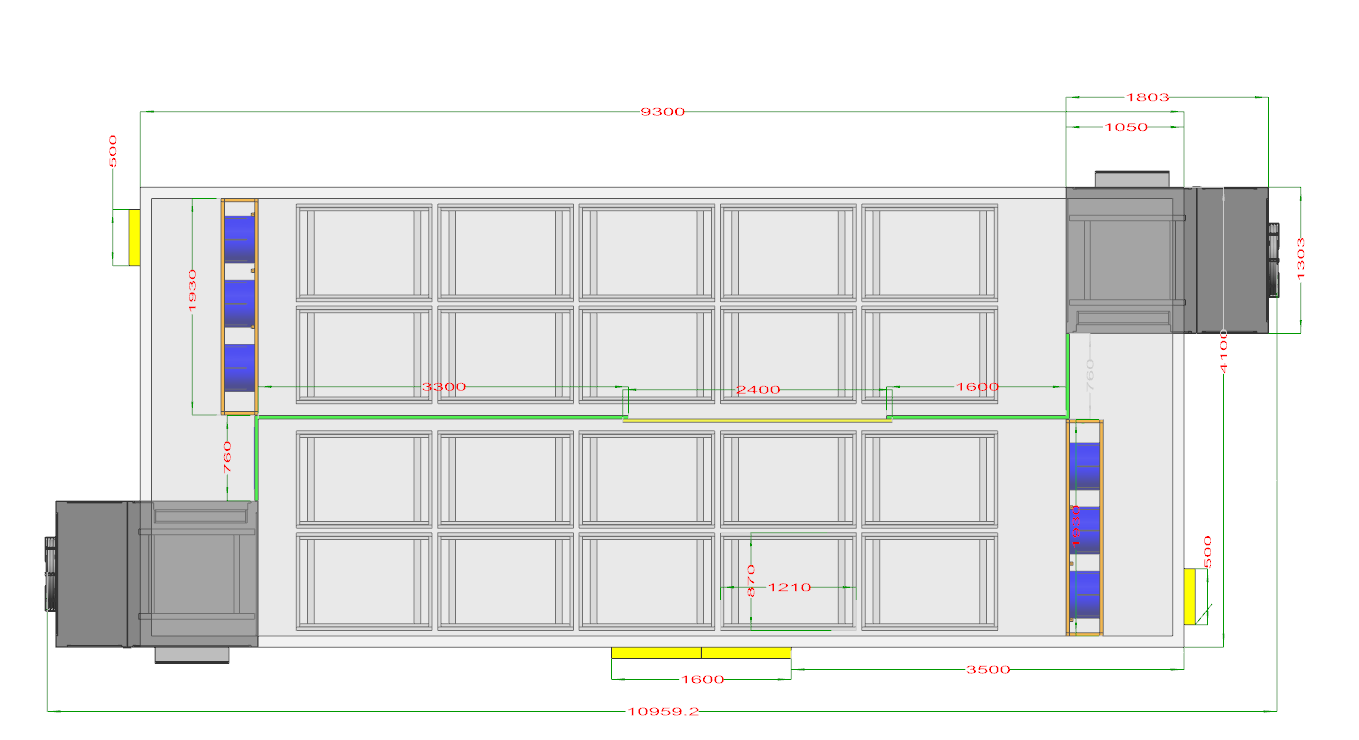
Complete sizing with climate, air path and operating scope.
Open-loop sizing must consider outdoor temperature and humidity, fresh-air intake, exhaust routing and room pressure. Closed-loop sizing must consider condensation duty, recirculation, room leakage and condensate handling. Controls should define sensors, stages, alarms, records and the response to abnormal conditions. Where production continuity is critical, the required redundancy and maintenance strategy should be discussed rather than assumed.
Resolve assumptions before selecting equipment.
- Confirm representative material and moisture data.
- Identify which process time is tested, estimated or still unknown.
- Check electrical supply, climate, room, drainage and installation access.
- Review loading workflow, air distribution and operator requirements.
- Define control scope, monitoring, alarms and any redundancy expectation.
Use the connected engineering references.
Size the system from verified project information.
Send the material, moisture, batch schedule, loading arrangement, climate and site information available for review.