
Herb and Medicinal Plant Heat Pump Drying Systems
Leaves, flowers, stems, roots and mixed botanical materials differ in fragility, surface area, aroma sensitivity and loading behavior. HPDRYER reviews the material form and handling method before proposing a drying-system direction.
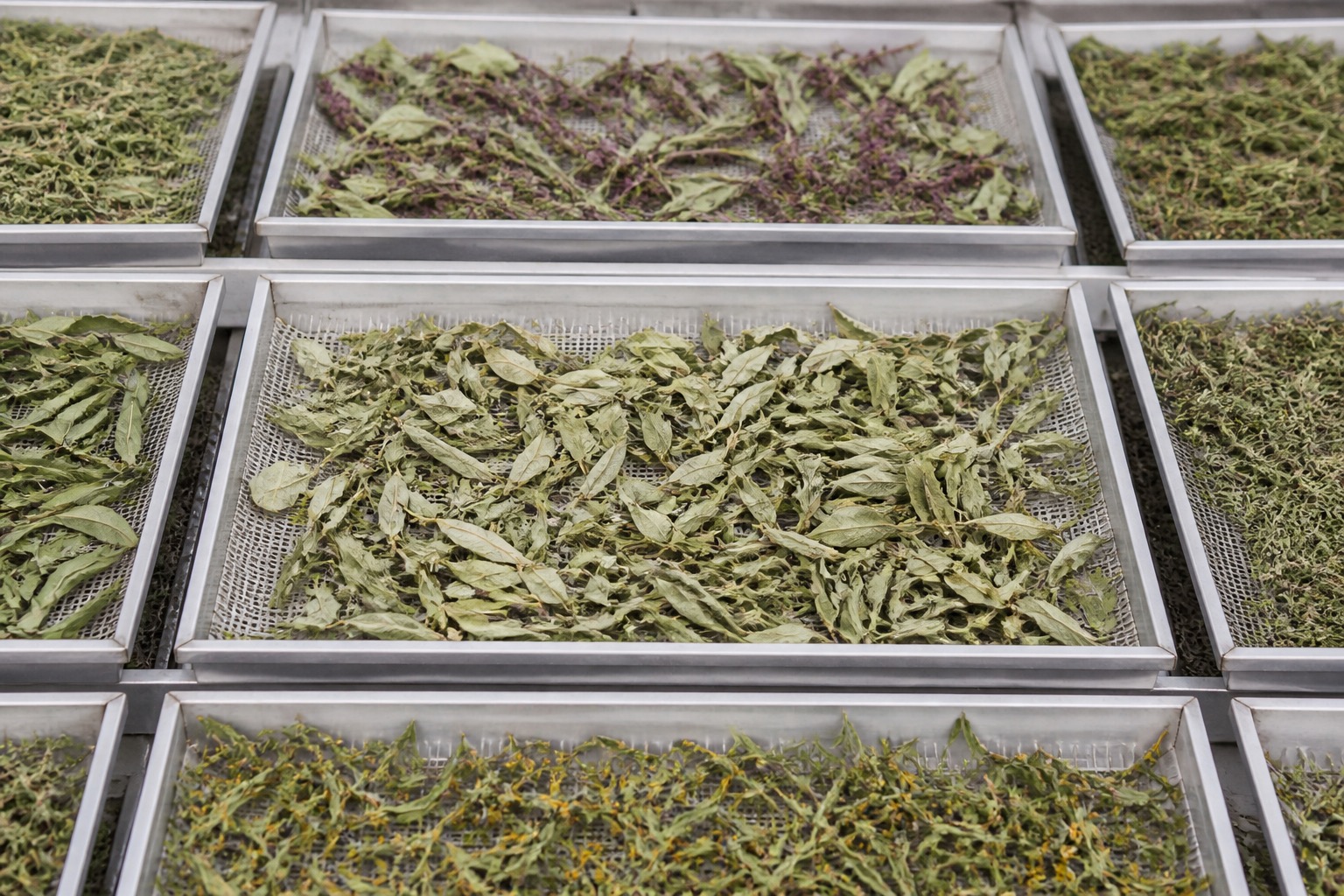
Delicate leaves and dense roots require different handling
Thin leaves and petals can move, fold or block mesh when airflow and tray loading are not coordinated. Stems and sliced roots may form deeper, less uniform layers with a different moisture path. The enquiry should separate each botanical part and preparation method instead of treating the crop name as complete process data.
Aroma-sensitive or fragile material may need closer discussion of temperature progression, humidity removal and air distribution. These are engineering considerations only; the page does not make medicinal, therapeutic or product-quality guarantees.
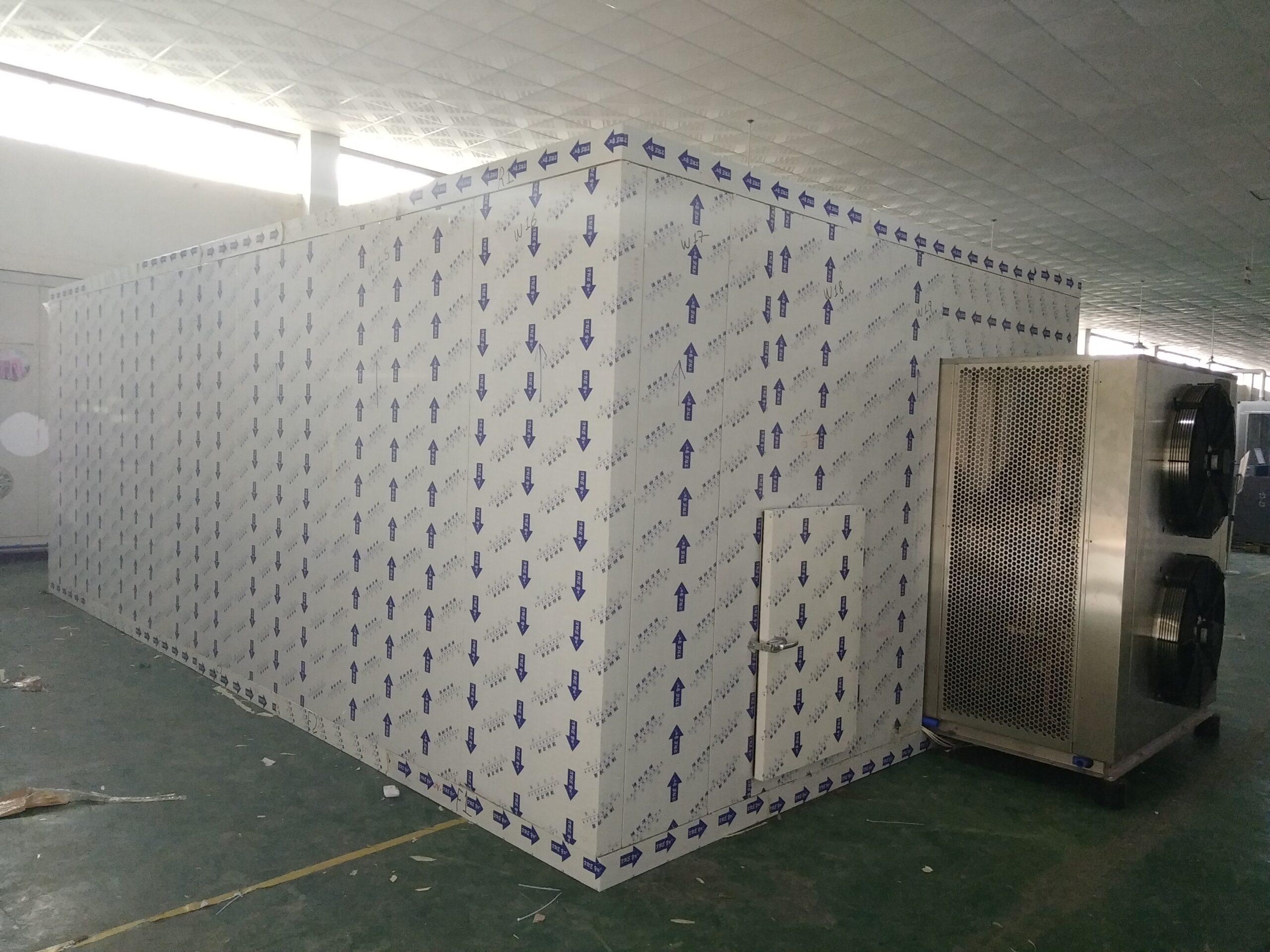
Project information HPDRYER reviews
Botanical form
Identify leaves, flowers, stems, roots or mixed material and describe cutting, washing and surface condition.
Fragility
Explain whether light pieces move easily, collapse, stick together or require shallow tray coverage.
Moisture and aroma
Provide initial and target moisture when known and note any customer-defined aroma or appearance concerns.
Loading workflow
Share mesh type, tray spacing, trolley arrangement, batch mass and manual handling constraints.
Air must reach delicate material without creating bypass paths
Loading depth and mesh resistance should be reviewed with supply and return locations. Very light leaves may require a different arrangement from dense root slices, so a room intended for several botanical forms should be evaluated around the actual loading cases.
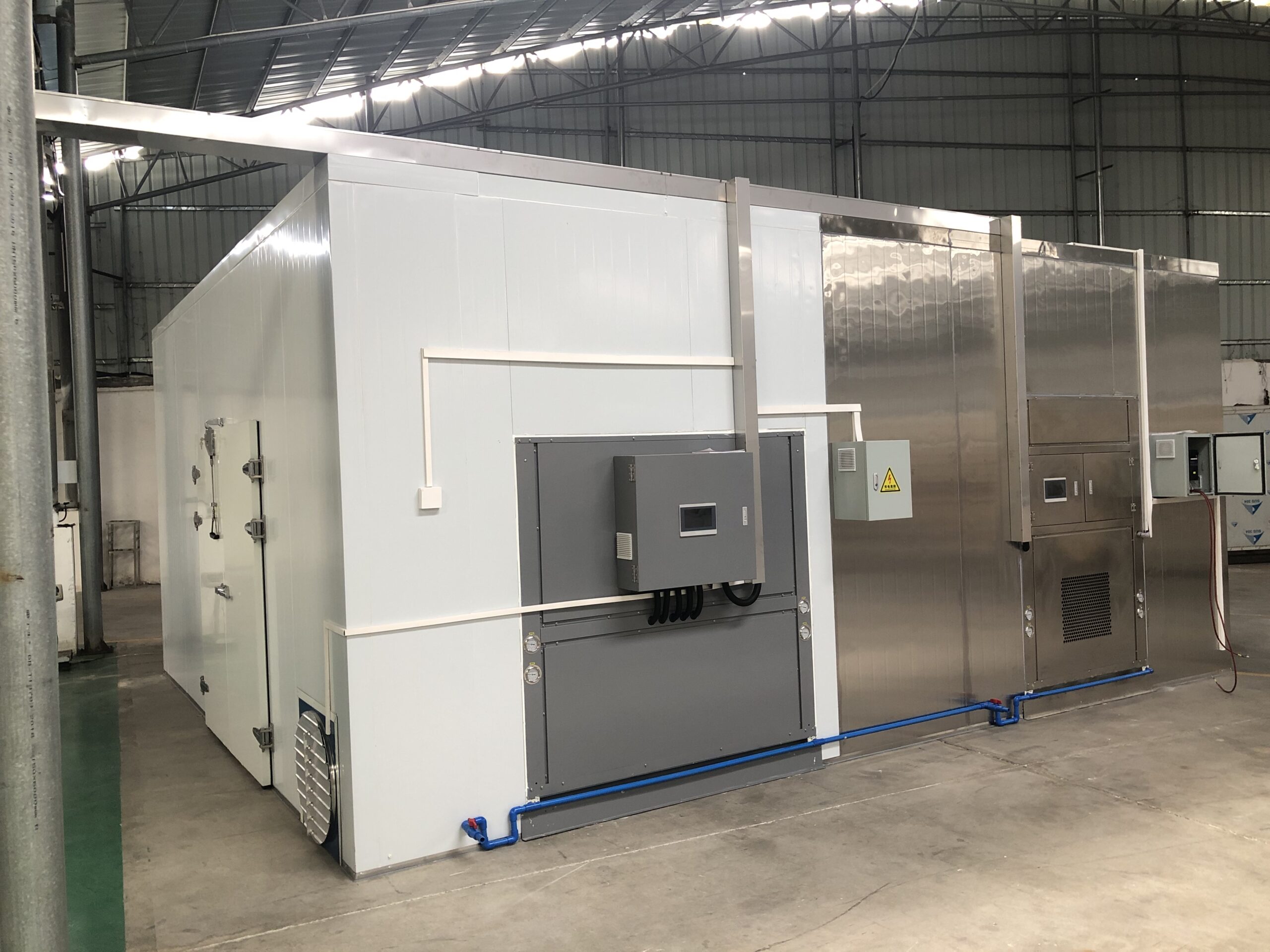
Connect the moisture path with the room and site
Climate, moisture discharge, room sealing and material sensitivity influence whether an open-loop or closed-loop architecture may be considered. The decision should be connected to the real botanical form, loading density and control requirements rather than a generic herb label.
Information needed for engineering review
Provide the available herb and medicinal plant process facts and identify any values that still require testing or confirmation.
- Plant name and botanical part
- Whole, cut, sliced or separated form
- Fresh batch quantity and tray coverage
- Moisture information when available
- Fragility or aroma-handling concerns
- Room, climate and utility information
Continue the engineering review
Prepare a botanical drying enquiry
Send the available herb and medicinal plant material, moisture, capacity, loading and site information for project-specific review.