
Seafood and Aquatic Product Heat Pump Drying Systems
Aquatic-product drying review begins with species, product form, fresh condition, surface liquid, moisture target and production workflow. Room access, odor handling and cleaning requirements should be defined before system selection.
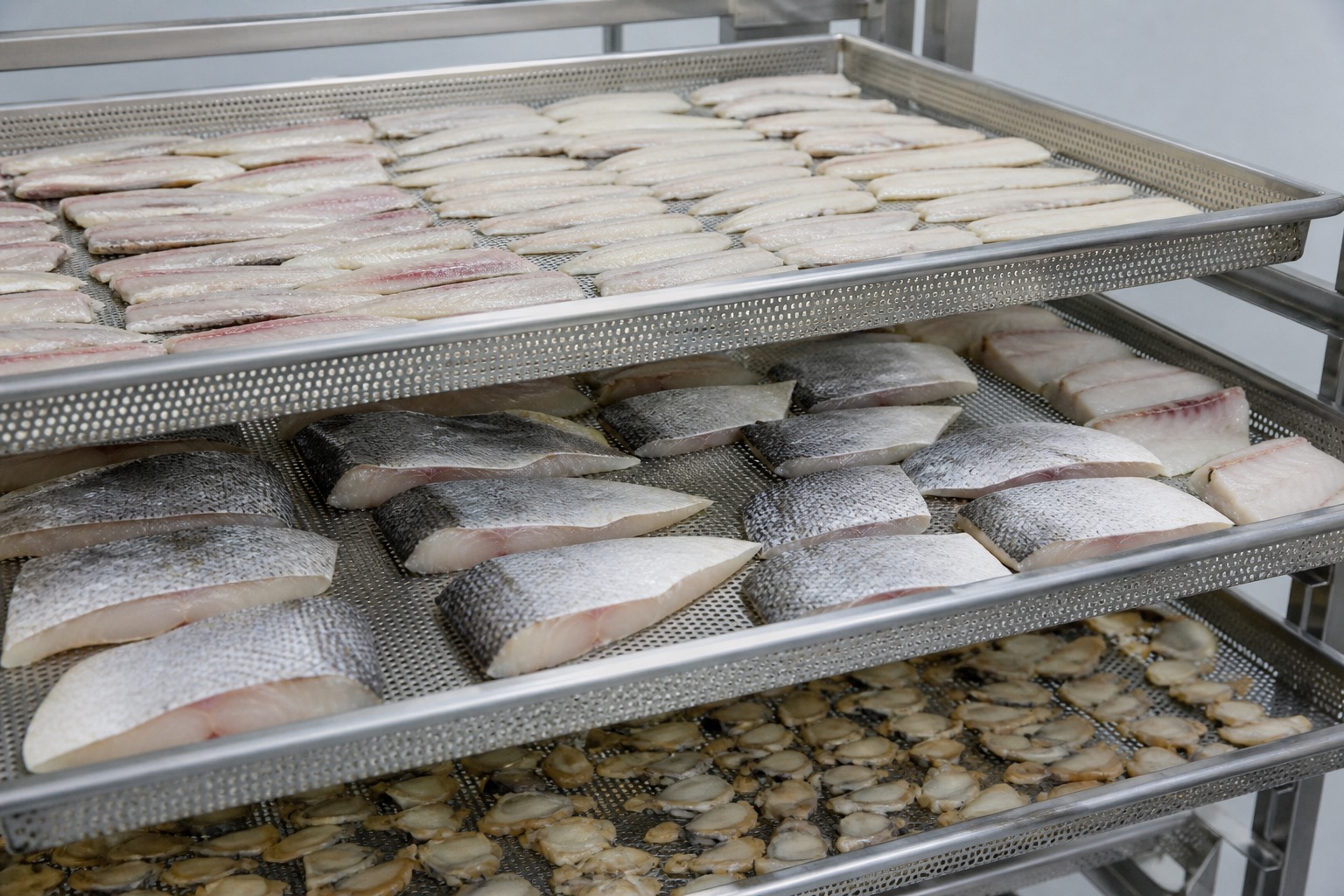
Species, cut form and surface liquid change the process
Whole fish, fillets, strips and other aquatic products expose different thicknesses and surface areas. Drip or residual surface liquid can affect tray handling, floor management and the early moisture load. The project brief should describe preparation, draining and loading steps before material enters the room.
Odor routing, condensate or exhaust handling, corrosion exposure and cleaning access should be discussed as installation conditions. Material selection and room detailing require project review; this page does not claim a particular sanitation certification or construction grade.
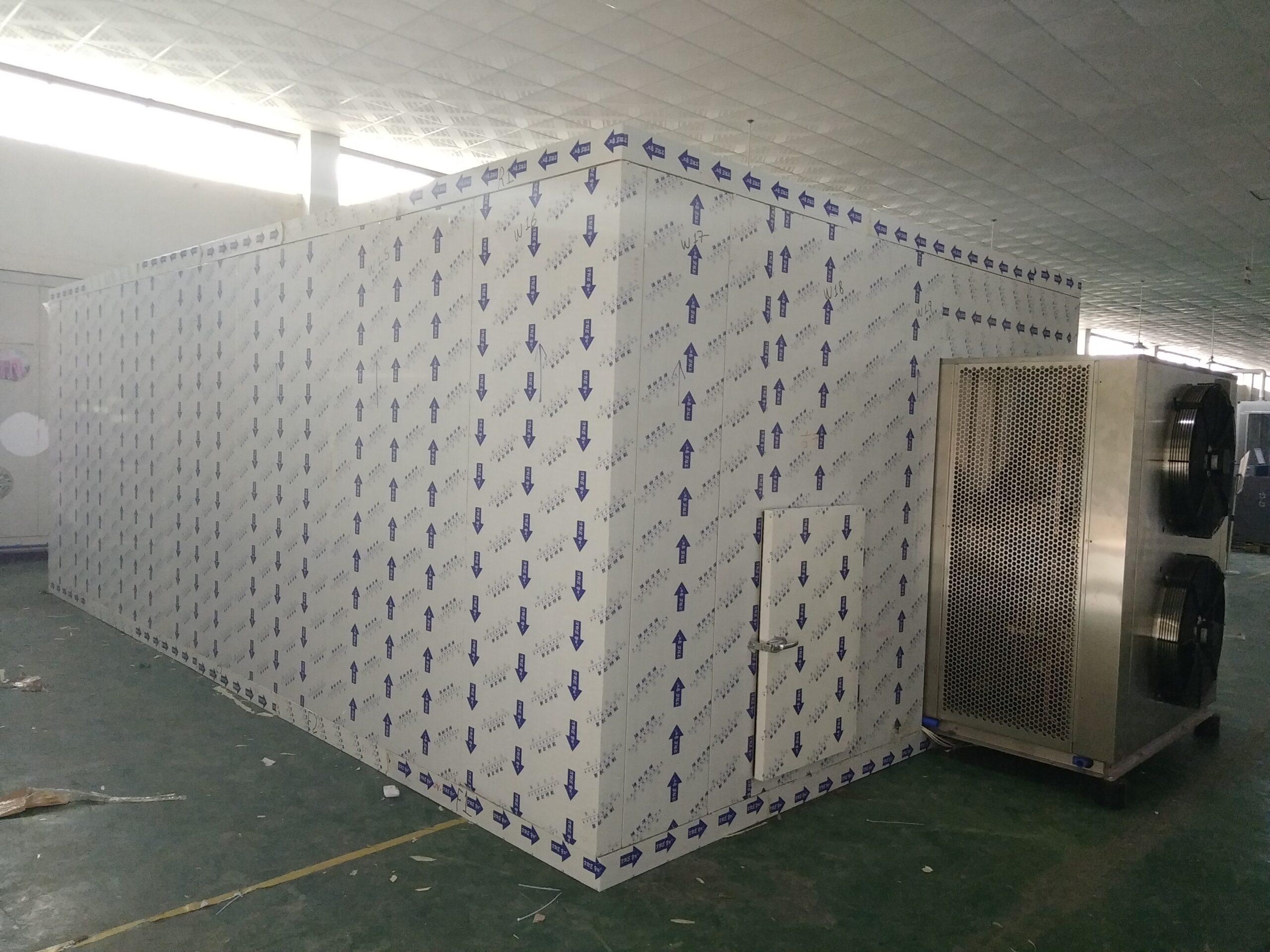
Project information HPDRYER reviews
Species and form
Identify the aquatic product, whole or prepared form, piece dimensions and fresh condition.
Drip management
Describe draining, surface liquid, tray design and any collection or floor-cleaning requirement.
Room environment
Clarify odor routing, cleaning access, wet-area exposure and separation from adjacent processes.
Moisture and controls
Provide batch mass, moisture data when known, temperature sensitivity and operator control needs.
Tray coverage should expose each piece to the intended air path
Overlapping pieces and mixed thicknesses can create uneven resistance. Trolley spacing, tray perforation, supply direction and return location should be reviewed together, while leaving practical access for loading, unloading and cleaning.
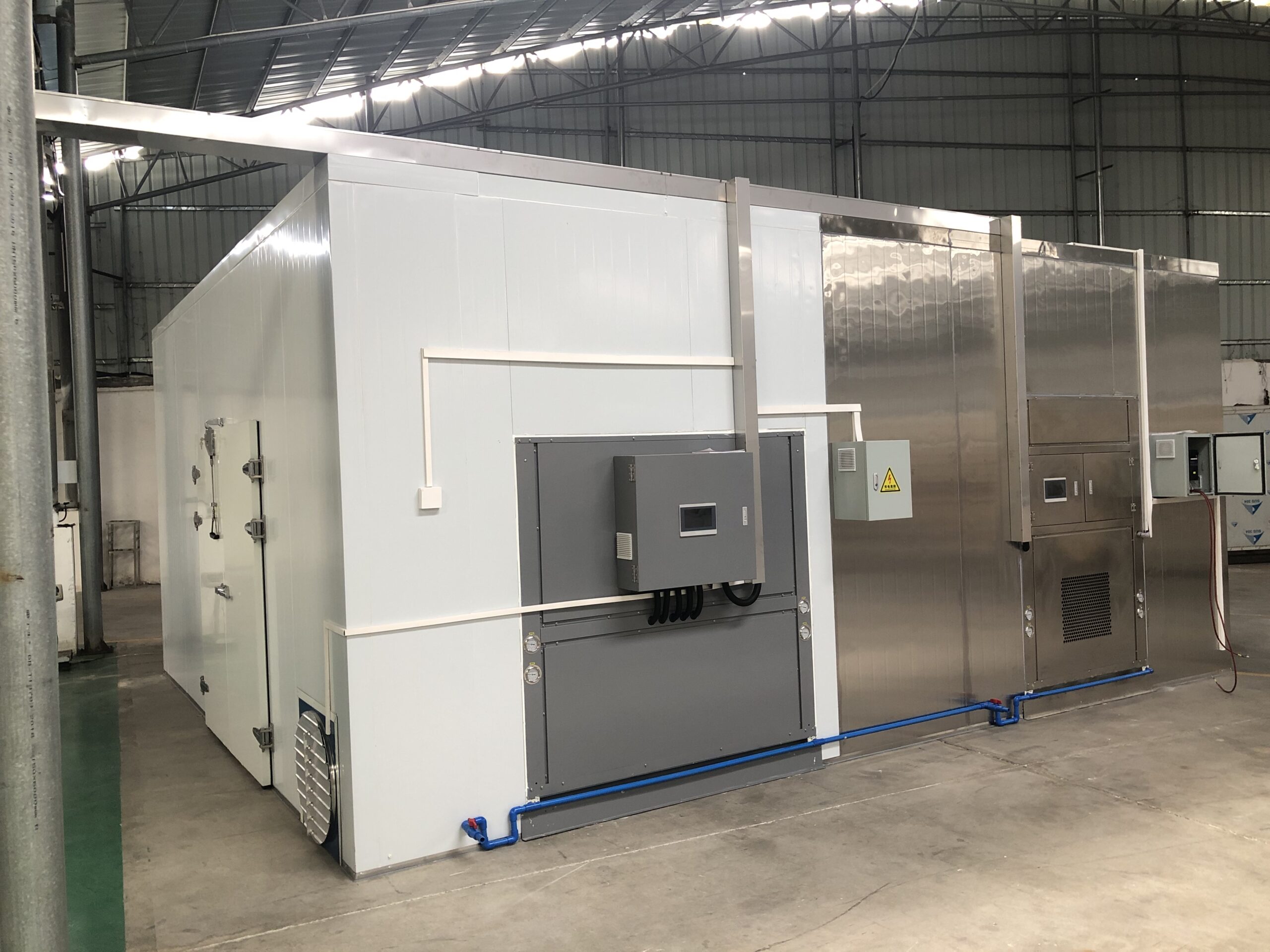
Connect the moisture path with the room and site
Open-loop architecture introduces fresh-air and exhaust questions, including climate and odor discharge. Closed-loop architecture introduces recirculation, moisture removal and room-envelope questions. Neither option is universally preferable; the site and process determine the review.
Compare system architecture for seafood and aquatic product.
Information needed for engineering review
Provide the available seafood and aquatic product process facts and identify any values that still require testing or confirmation.
- Species and prepared product form
- Piece dimensions and fresh batch mass
- Initial and target moisture when known
- Draining and surface-liquid condition
- Tray, trolley and cleaning workflow
- Odor, room, climate and power constraints
Continue the engineering review
Review an aquatic-product drying project
Send the available seafood and aquatic product material, moisture, capacity, loading and site information for project-specific review.