
Airflow Design for Industrial Drying Rooms
Airflow design reviews supply and return paths, material arrangement, room geometry, pressure conditions and the relationship between air movement and moisture removal.
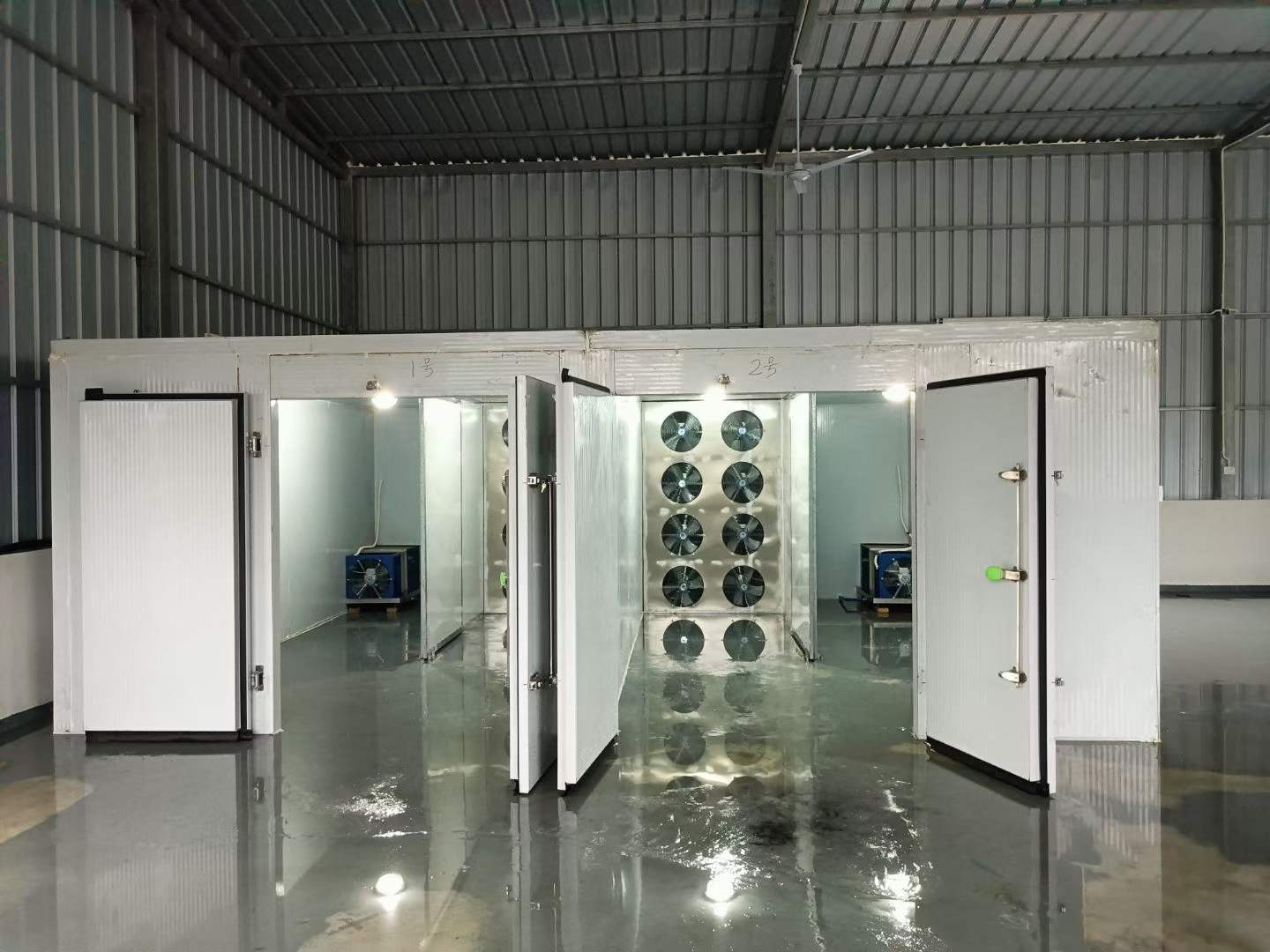
Airflow connects equipment to material.
The air path must be considered with room geometry, trays or trolleys, loading density, moisture release, temperature and humidity control.
Information used for the first engineering review.
Room geometry
Dimensions, openings, partitions and usable drying zone.
Material layout
Tray spacing, trolley position, rack arrangement and loading density.
Air path
Supply, return, circulation, intake or exhaust where relevant.
Operating conditions
Temperature, humidity, moisture release and control sequence.
Map air movement through the loaded room.
A practical review identifies supply and return locations, obstructions, loading arrangement and how the air path supports temperature, humidity and moisture control.
| Review item | Engineering question |
|---|---|
| Supply | Where does conditioned air enter the drying zone? |
| Return | How does air return without bypassing the material? |
| Loading | Does the loaded arrangement change the available path? |
| Control | Which sensors represent the material and room conditions? |
Trace supply, return and recirculation paths around the room and loading arrangement.
- Distribution: Avoid designing only around an empty room.
- Pressure: Consider intake, exhaust and return conditions together.
- Loading: Review the loaded state, not only the equipment connection.
- Maintenance: Keep access and service paths in the room plan.
Questions that should be resolved early.
- Empty-room assumptions: Airflow may change significantly after loading.
- Single-point thinking: One outlet does not describe room distribution.
- No moisture path: Airflow and moisture removal must be reviewed together.
Trace air movement from room layout to control points.
Have a project to review?
Share material, moisture, capacity, climate, loading, airflow and control information with HPDRYER.