
Food and Agricultural Drying
Spice Drying Systems
Spices may arrive as seeds, pods, bark, roots, leaves or prepared slices. Their geometry, aroma sensitivity, particle size and loading behavior must be defined before HPDRYER evaluates airflow, temperature, humidity and system architecture.
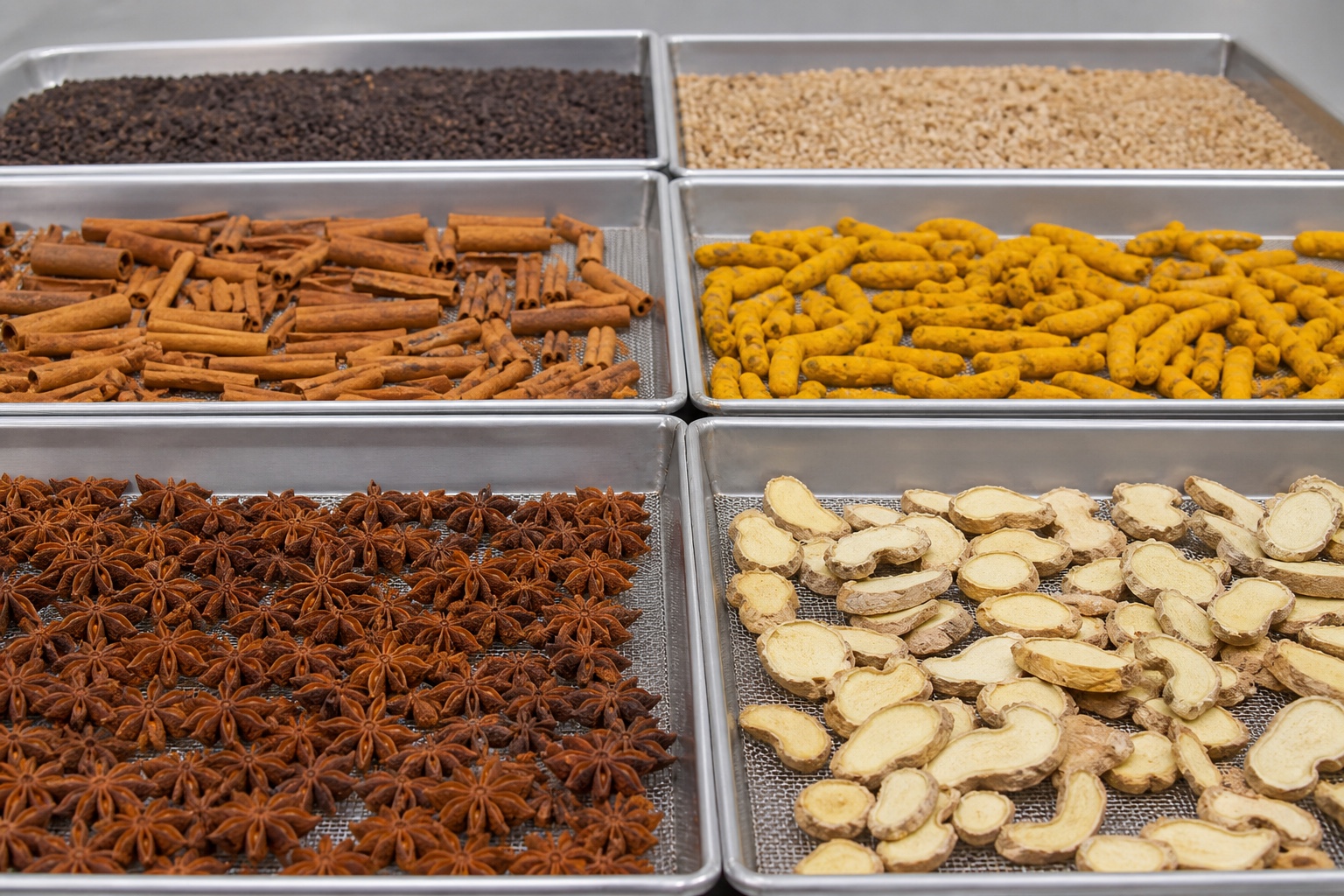
Material Diversity
A spice name is not enough for equipment selection
Whole cinnamon bark, star anise, seeds and sliced roots present different airflow resistance and moisture paths. Fine or lightweight pieces may also move under excessive local air velocity.
RFQ information
- Exact spice and incoming material form
- Whole, cut, sliced, seed or leaf condition
- Fresh mass and expected batch schedule
- Moisture data and final handling requirement
- Cleaning and changeover expectations
Engineering considerations
Aroma-sensitive process
Control decisions should consider the material’s volatile components without assuming one universal setting.
Particle movement
Air velocity and tray mesh should be reviewed for seeds, leaves and lightweight fragments.
Cross-contact planning
Multi-product operations should describe cleaning, sequence and changeover requirements.
Uneven geometry
Whole pods, bark and root slices may require different layer depths or separate process validation.
System and room evaluation
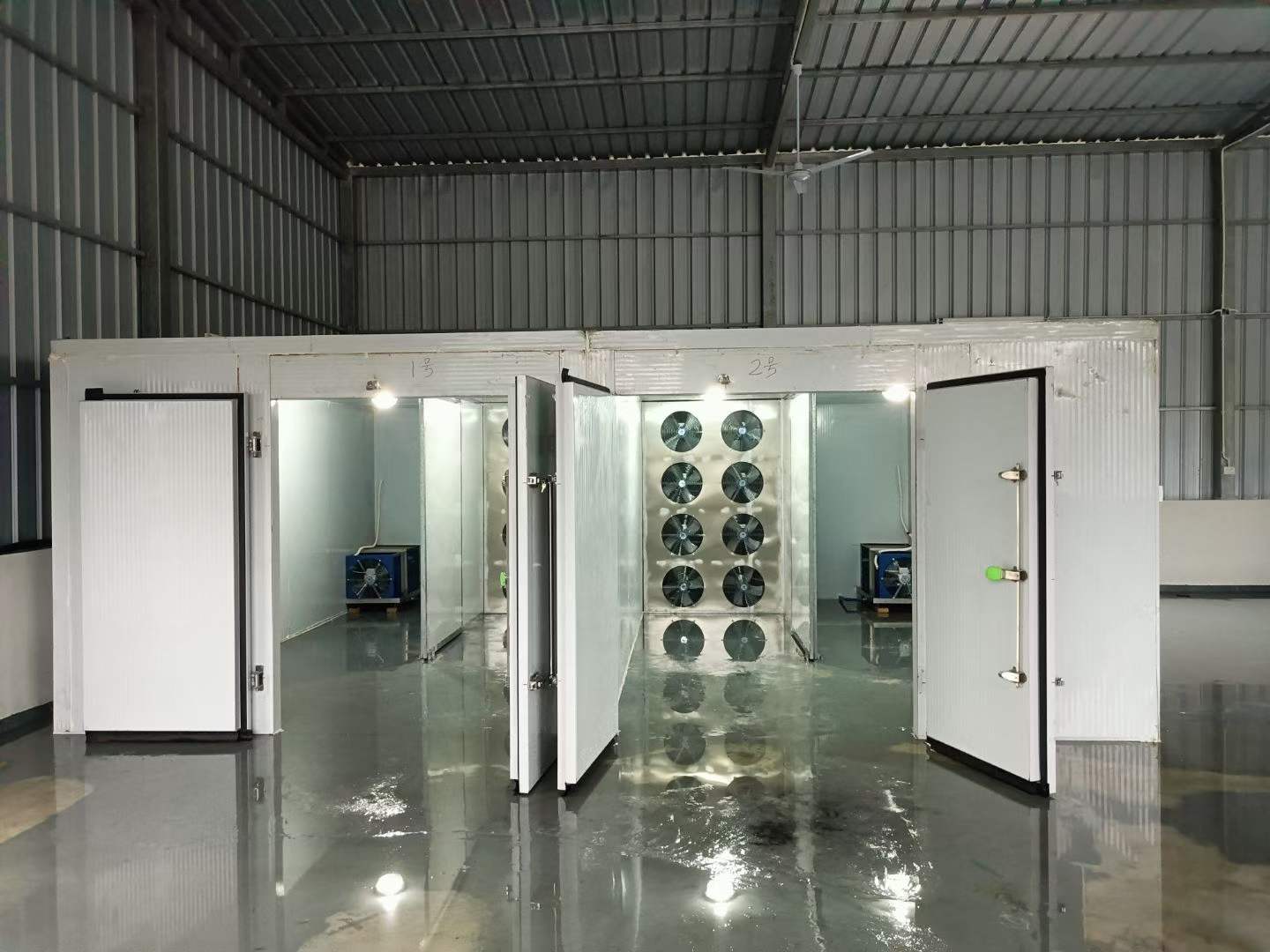
Open-loop or closed-loop selection depends on climate, odor or moisture discharge planning, room construction and process control. The final air path must serve each loaded tray without carrying small material into returns.
Related planning pages
Project Review
Describe the exact spice and preparation method
Send representative material information, fresh quantity, moisture data and room or loading constraints.